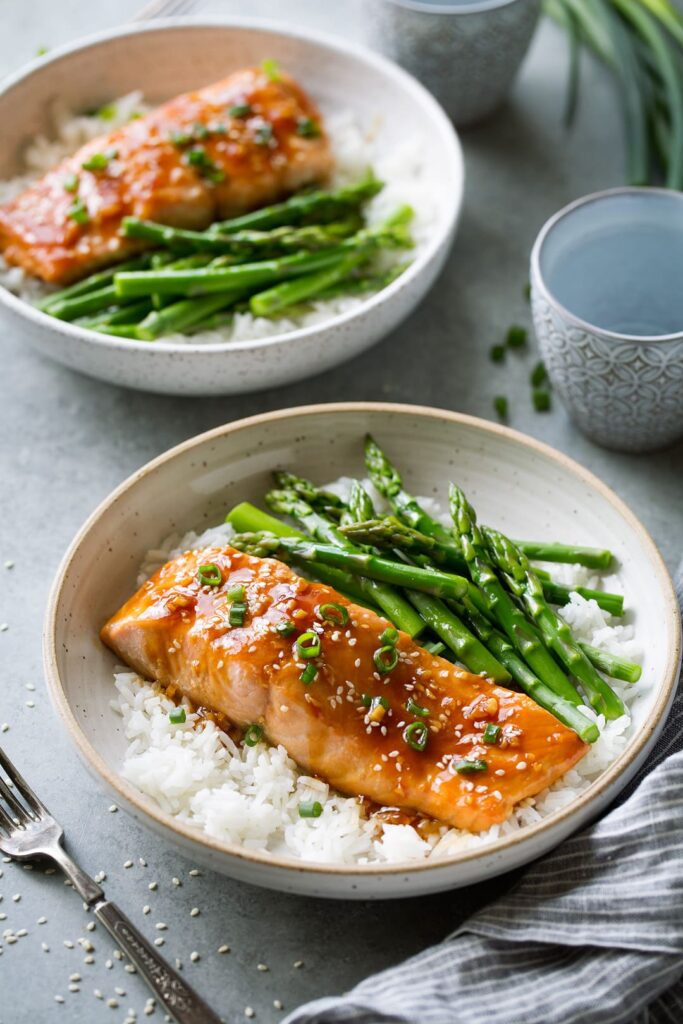
There’s something incredibly satisfying about a perfectly cooked piece of salmon coated in a glossy, sweet and savory glaze. This Teriyaki Salmon brings together tender, flaky fish and a rich homemade sauce that caramelizes beautifully in the oven, creating a dish that feels both comforting and a little bit special.
The salmon stays moist and delicate as it bakes, while the teriyaki sauce builds layers of flavor with soy, garlic, ginger, and a touch of sweetness. Once the sauce is reduced and brushed over the top, it creates that signature sticky finish that makes every bite deeply flavorful and satisfying.
What makes this recipe stand out is how approachable it is. With just a bit of marinating and a quick bake in the oven, you get a restaurant-quality dish that pairs effortlessly with rice and vegetables. It’s ideal for weeknight dinners when you want something wholesome, flavorful, and easy to prepare.
Why I Keep Making This Salmon
This is one of those recipes that manages to feel both simple and impressive at the same time. It’s easy enough to make on a busy evening, yet flavorful enough to serve when you want something a little more elevated.
What I love most is how well the sauce complements the salmon. The sweetness, saltiness, and subtle tang all come together in a way that enhances the natural richness of the fish without overpowering it. As it bakes, the flavors deepen and create that irresistible glazed finish.
It’s also incredibly reliable. The cooking time is quick, the steps are straightforward, and the results are consistently tender and flavorful. It’s a recipe you can make with confidence, even if you’re short on time.
And then there’s the versatility. It pairs beautifully with simple sides like rice, noodles, or vegetables, making it easy to adapt depending on what you have on hand. That balance of ease and flavor is exactly why I keep coming back to it.
What Kind of Salmon Should I Use?
- This recipe uses a salmon filet cut into individual portions. Fresh salmon works great, but frozen salmon can also be used if it is fully thawed first.
- Skin on salmon is perfectly fine for baking. The skin helps hold the fish together and can be removed easily after cooking if you prefer.
- Try to cut the pieces about the same size so they cook evenly in the oven.
Variations You Can Mess Around With
- Add a splash of orange juice to the sauce for a citrusy twist.
- Use honey instead of brown sugar for a smoother sweetness.
- Add chili flakes for a hint of heat.
- Swap salmon with trout or cod for a different texture.
- Grill the salmon instead of baking for a smoky flavor.
Pro Tips for Perfect Results
- Use fresh salmon for the best texture and flavor.
- Do not over-marinate, as it can affect the texture of the fish.
- Line the baking sheet for easier cleanup.
- Watch the cooking time closely to avoid drying out the salmon.
- Simmer the sauce until slightly thick for the best glaze.
How To Make Teriyaki Salmon?
Equipment
- Baking sheet
- Mixing bowl
- Saucepan
- Spoon
- Foil
Ingredients
For the Teriyaki Salmon
- 2 1/2 lbs salmon filet, sliced into 2 inch wide slices
For the Teriyaki Sauce
- 3 Tbsp teriyaki sauce
- 3 Tbsp hoisin sauce
- 3 Tbsp soy sauce
- 1 Tbsp white vinegar
- 1 Tbsp sesame oil
- 1/3 cup packed light brown sugar
- 2 large or 3 medium garlic cloves, minced
- 2 tsp freshly grated ginger, or 1/2 tsp ground ginger
To Serve
- Sesame seeds, optional
- Green onion, chopped, optional
Instructions
Step 1:
Preheat the oven to 400°F. Prepare a large rimmed baking sheet by lining it with foil and lightly greasing it for easier cleanup.
Step 2:
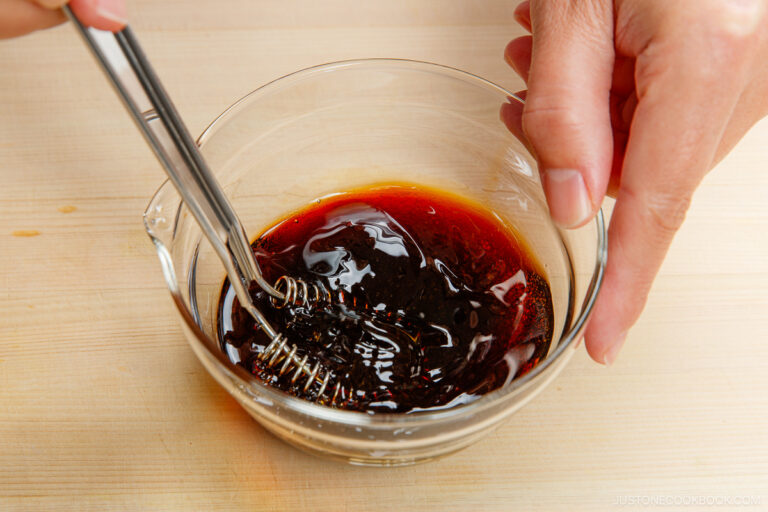
In a bowl, combine the teriyaki sauce, hoisin sauce, soy sauce, white vinegar, sesame oil, brown sugar, minced garlic, and grated ginger. Stir until the brown sugar is fully dissolved.
Step 3:
Place the salmon slices in a mixing bowl. Pour the prepared sauce over the salmon and gently toss to coat. Cover with plastic wrap and let the salmon marinate for about 20 minutes at room temperature or in the refrigerator.
Step 4:
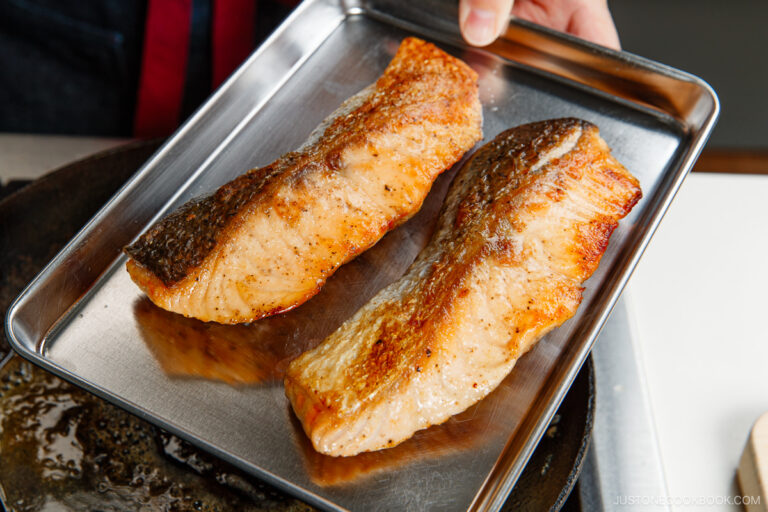
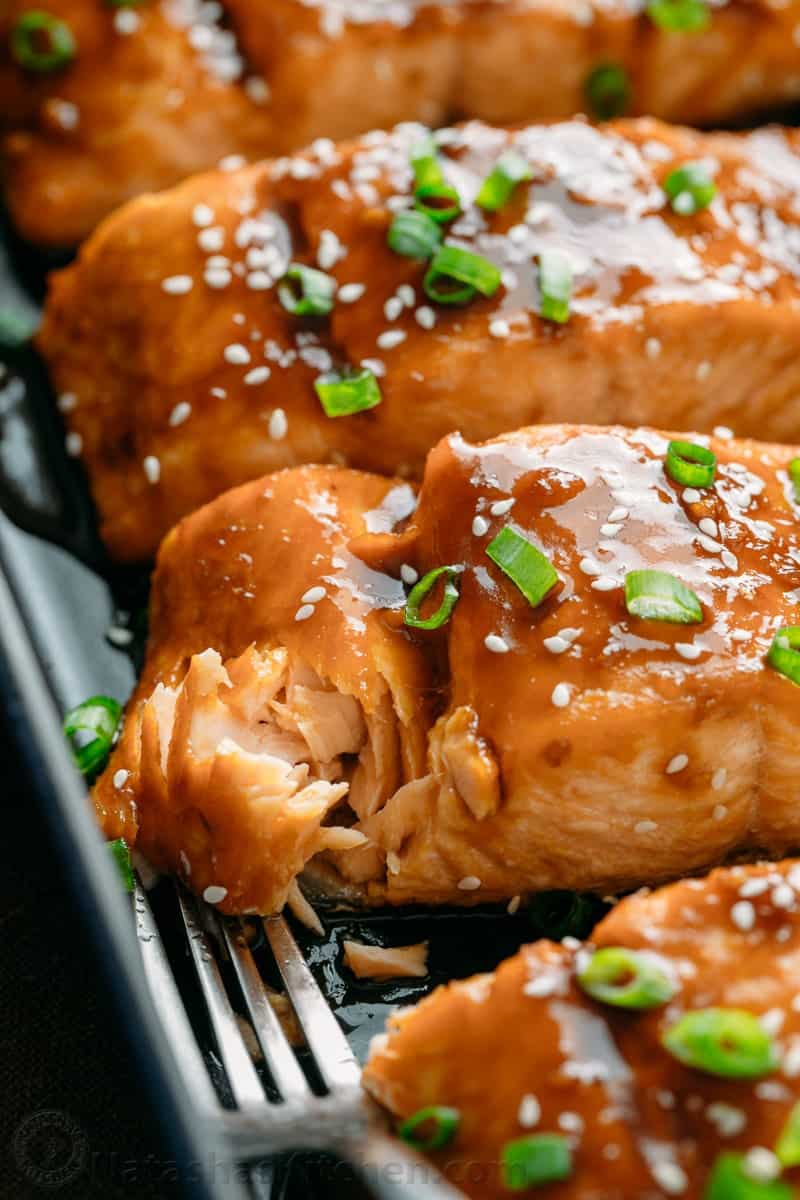
Arrange the salmon pieces on the prepared baking sheet. Keep the leftover marinade for later. Bake the salmon for 12 to 16 minutes, or until the fish flakes easily with a fork. Cooking time may vary depending on the thickness of the salmon.
Step 5:
While the salmon is baking, pour the remaining marinade into a small saucepan. Bring it to a boil, then reduce the heat and let it simmer for about 3 to 4 minutes, stirring occasionally, until it thickens slightly. Remove from heat.
Step 6:
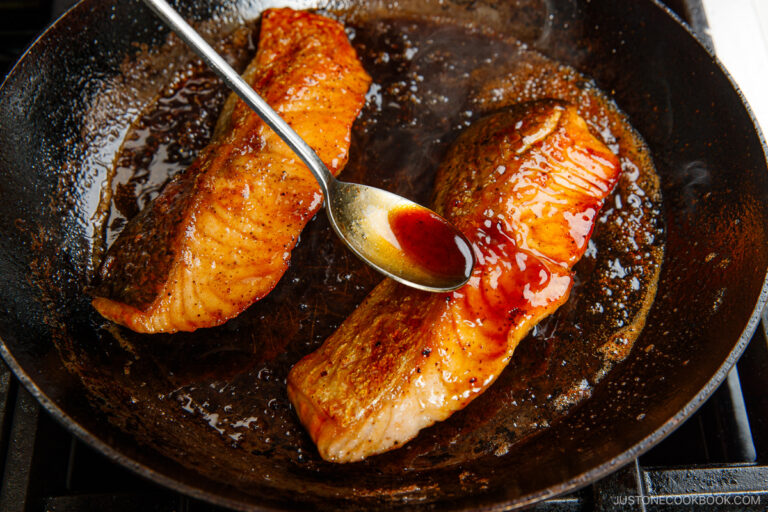
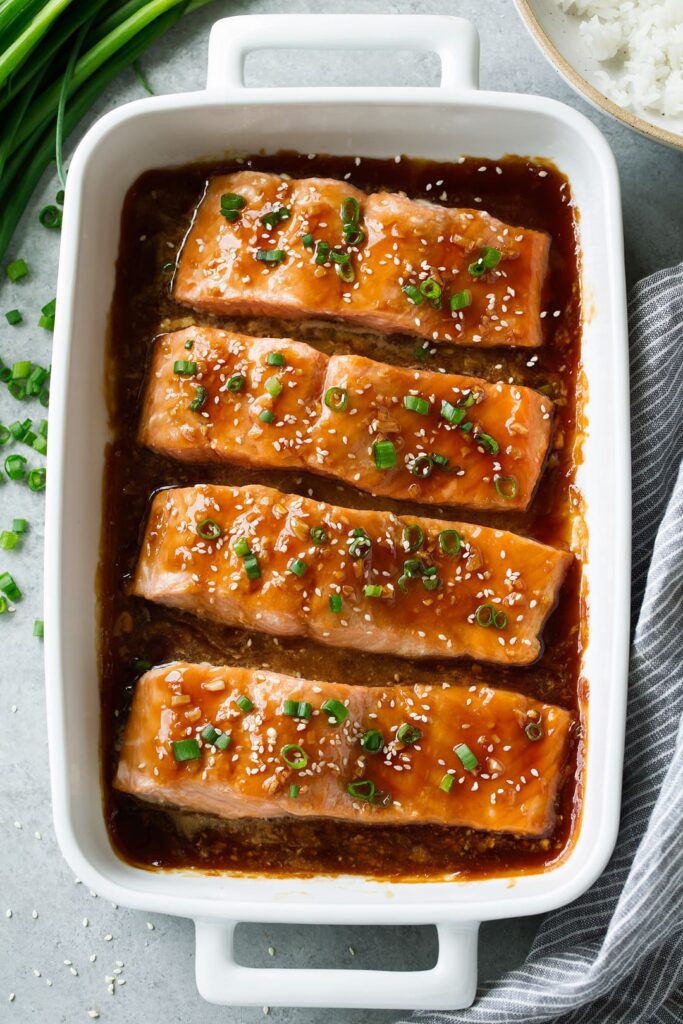
Once the salmon is done baking, brush the thickened teriyaki sauce over the top. Sprinkle with chopped green onion and sesame seeds if desired. Serve warm.
Teriyaki Salmon Recipe
Ingredients
Equipment
Method
- Preheat the oven to 400°F. Prepare a large rimmed baking sheet by lining it with foil and lightly greasing it for easier cleanup.
- In a bowl, combine the teriyaki sauce, hoisin sauce, soy sauce, white vinegar, sesame oil, brown sugar, minced garlic, and grated ginger. Stir until the brown sugar is fully dissolved.
- Place the salmon slices in a mixing bowl. Pour the prepared sauce over the salmon and gently toss to coat. Cover with plastic wrap and let the salmon marinate for about 20 minutes at room temperature or in the refrigerator.
- Arrange the salmon pieces on the prepared baking sheet. Keep the leftover marinade for later. Bake the salmon for 12 to 16 minutes, or until the fish flakes easily with a fork. Cooking time may vary depending on the thickness of the salmon.
- While the salmon is baking, pour the remaining marinade into a small saucepan. Bring it to a boil, then reduce the heat and let it simmer for about 3 to 4 minutes, stirring occasionally, until it thickens slightly. Remove from heat.
- Once the salmon is done baking, brush the thickened teriyaki sauce over the top. Sprinkle with chopped green onion and sesame seeds if desired. Serve warm.
Notes
Nutritional Information
| Nutrient | Amount |
|---|---|
| Calories | 276 kcal |
| Carbohydrates | 13 g |
| Fat | 10 g |
| Protein | 29 g |
Note: Nutritional values are approximate and may vary depending on ingredient size, quality, brand, location, and the proportions used. All nutritional information is calculated on a per-serving basis.
If you are following a medically restrictive diet, please consult your doctor or registered dietitian before preparing this recipe for personal consumption.
Common Mistakes to Avoid
- Overcooking the salmon, which can make it dry.
- Not dissolving the sugar fully in the sauce.
- Skipping the marinade step, reducing flavor depth.
- Using too much sauce during baking, causing excess liquid.
- Not reducing the sauce for a proper glaze.
How I Like to Serve These
- With steamed white rice for a classic pairing.
- Alongside stir-fried vegetables.
- Over noodles for a quick bowl meal.
- With a fresh cucumber salad for contrast.
- Topped with extra sesame seeds for texture.
Storage / Leftovers and Next-Day Thoughts
- Store leftovers in an airtight container in the refrigerator for up to three days.
- Reheat gently to avoid drying out the salmon.
- Add a splash of water or sauce when reheating.
- The flavor deepens slightly the next day.
- Best enjoyed fresh but still delicious as leftovers.
FAQs
Can I use frozen salmon?
Yes, just thaw it completely before marinating and cooking.
Can I make the sauce ahead of time?
Yes, the sauce can be prepared and stored in the refrigerator.
How do I know when the salmon is done?
It should flake easily with a fork and appear opaque.
Can I cook this on the stovetop?
Yes, you can pan-sear the salmon and add the sauce at the end.
Is this recipe very sweet?
It has a balanced sweet and savory flavor, but you can adjust the sugar to taste.

I’m Emma Parker, the writer and founder behind Emma’s Home Guide. This blog was created to share practical ideas, honest experiences, and helpful guidance for everyday living. My goal is to make home life feel easier, warmer, and more enjoyable, without pressure or perfection.