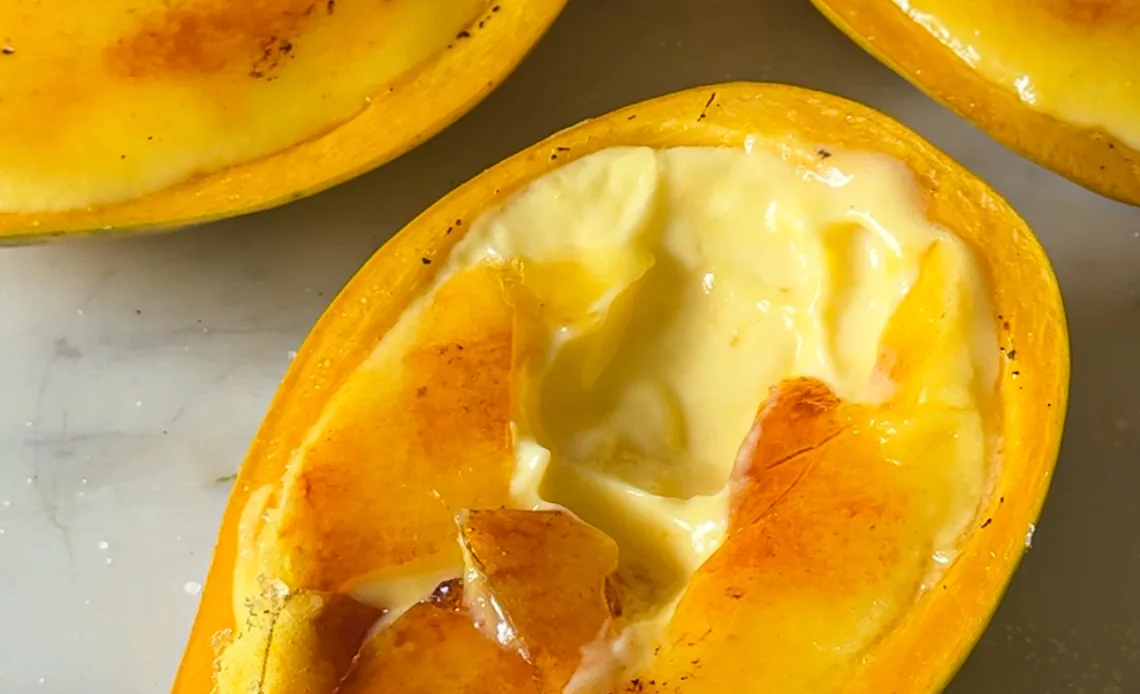
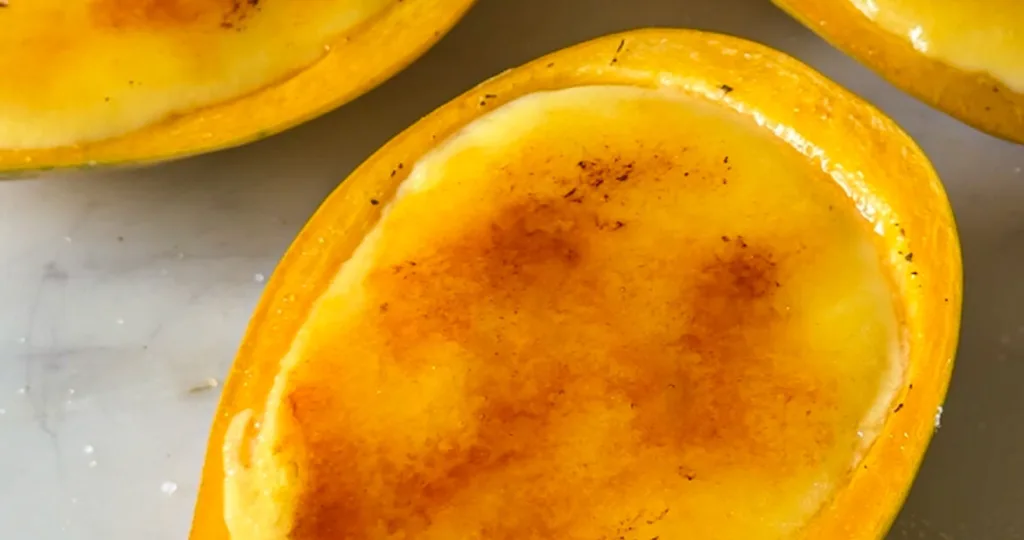
Bright, creamy, and just a little bit dramatic, mango bango is one of those desserts that feels both playful and elegant at the same time. Served right inside mango shells and finished with a crisp brûlée top, it instantly stands out without needing complicated steps.
At its core, this dessert is smooth mango posset, rich with cream and naturally thickened with citrus. The flavor is intensely fruity, balanced with just enough sweetness and a slight tang from lemon to keep it from feeling heavy.
What makes this recipe especially fun is the presentation. Using the mango peels as edible cups gives it a fresh, eye-catching look that feels perfect for summer gatherings or special dinners.
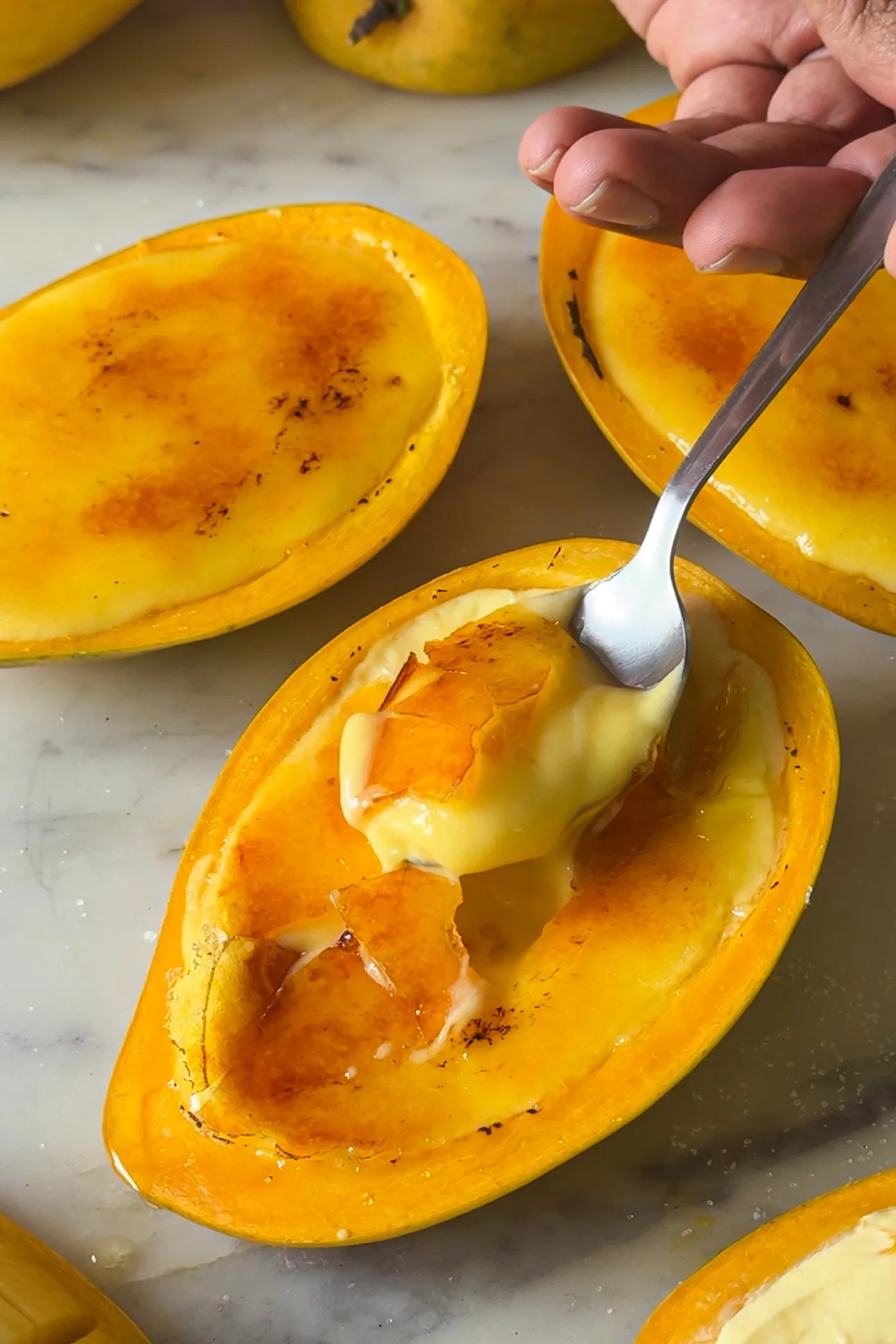
Then comes the final touch, a thin layer of caramelized sugar that cracks beautifully with every spoonful. That contrast between the creamy base and crisp top is what really makes each bite satisfying.
It’s simple to prepare, easy to chill ahead, and delivers a dessert that feels far more impressive than the effort it requires.
Why I Keep Making This Mango Bango
This recipe keeps finding its way back into my kitchen because it’s both easy and memorable. It doesn’t take much time to prepare, yet the result always feels special.
The texture is one of the main reasons I love it. It sets into a smooth, creamy consistency that feels like a cross between custard and mousse, without needing eggs or baking.
The flavor is another highlight. The natural sweetness of mango combined with cream creates a rich base, while the lemon juice adds just enough brightness to keep everything balanced.
I also appreciate how visually appealing it is. Serving it in mango shells with a brûlée top makes it look elegant and unique, even though the process is straightforward.
It’s a dessert that works just as well for casual meals as it does for entertaining, which makes it worth repeating again and again.
How to Make Mango Bango?
Ingredients
- 2 mangoes
- 1 cup whipping cream
- 1/3 cup mango puree
- 2 tbsp sugar
- 1 tbsp lemon juice
- Sugar, for brulee
Equipment
- Knife
- Spoon
- Blender
- Saucepan
- Mixing spoon
- Refrigerator
- Kitchen torch or hot spoon
Instructions
Step 1:
Slice the mangoes in half along the seed and carefully scoop out the flesh using a spoon, making sure the peels stay intact so they can be used as serving cups.
Step 2:
Blend the scooped mango flesh into a smooth puree, then measure out 1/3 cup and set it aside for the recipe.
Step 3:
In a saucepan, combine the whipping cream, sugar, and measured mango puree, then heat gently while stirring until the sugar dissolves and the mixture just begins to bubble at the edges without boiling.
Step 4:
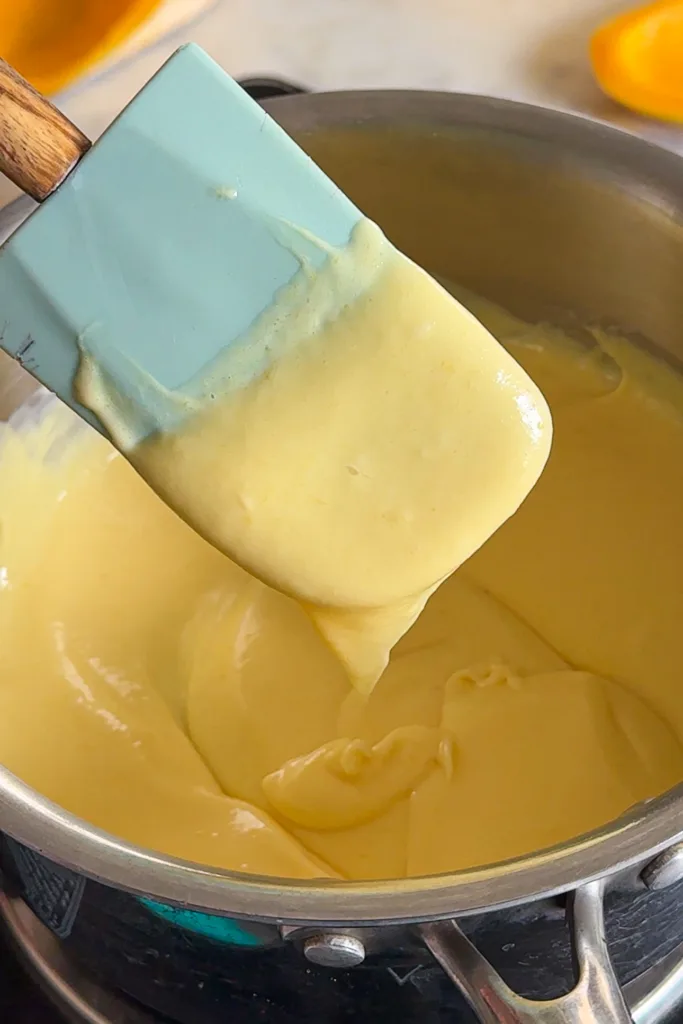
Remove the saucepan from the heat and immediately stir in the lemon juice, allowing the mixture to begin thickening as it cools into a smooth, creamy consistency.
Step 5:
Carefully pour the mixture into the prepared mango peel halves, filling each about three-quarters full to prevent spilling during setting.
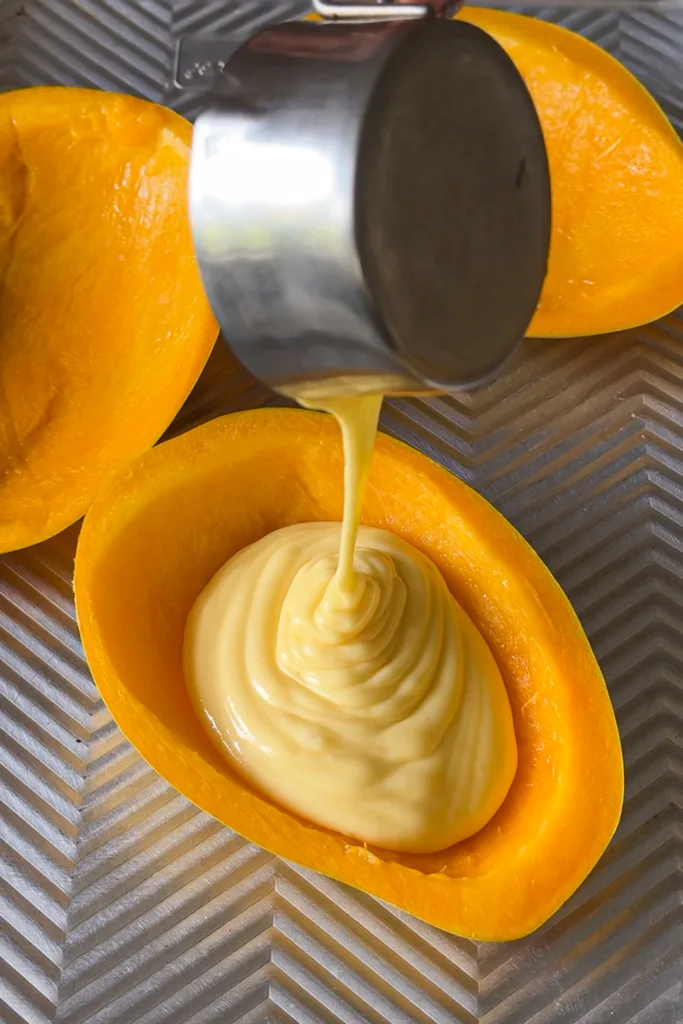
Step 6:
Place the filled mango cups in the refrigerator and chill for several hours or overnight until the dessert is fully set and firm.
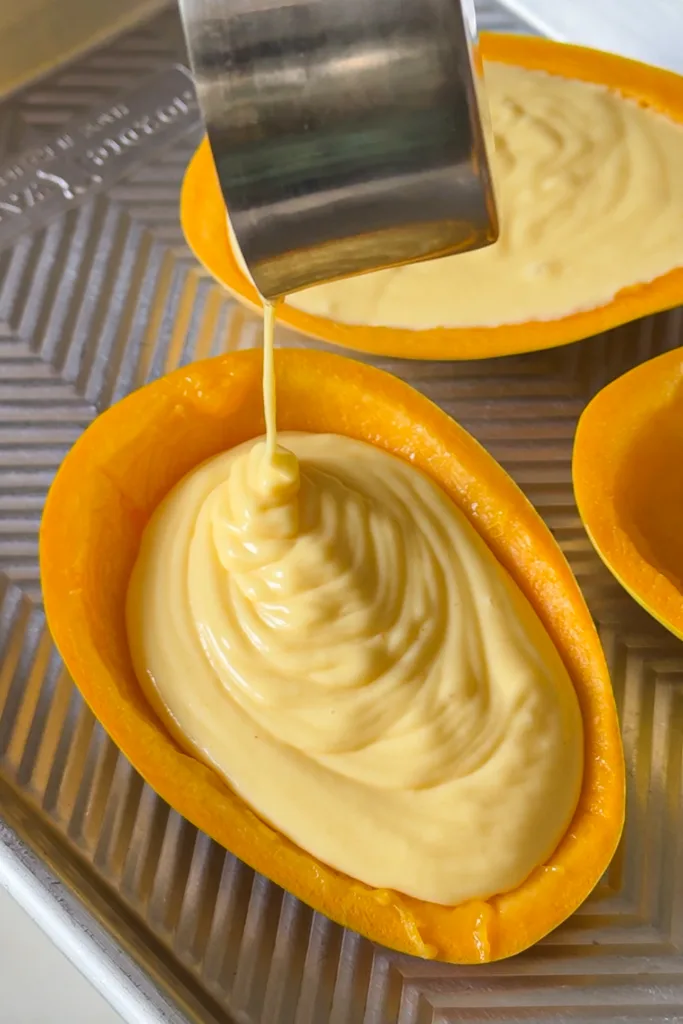
Step 7:
Just before serving, sprinkle a thin, even layer of sugar over the surface and caramelize it using a kitchen torch or hot spoon until golden and crisp, then let it cool briefly before serving.
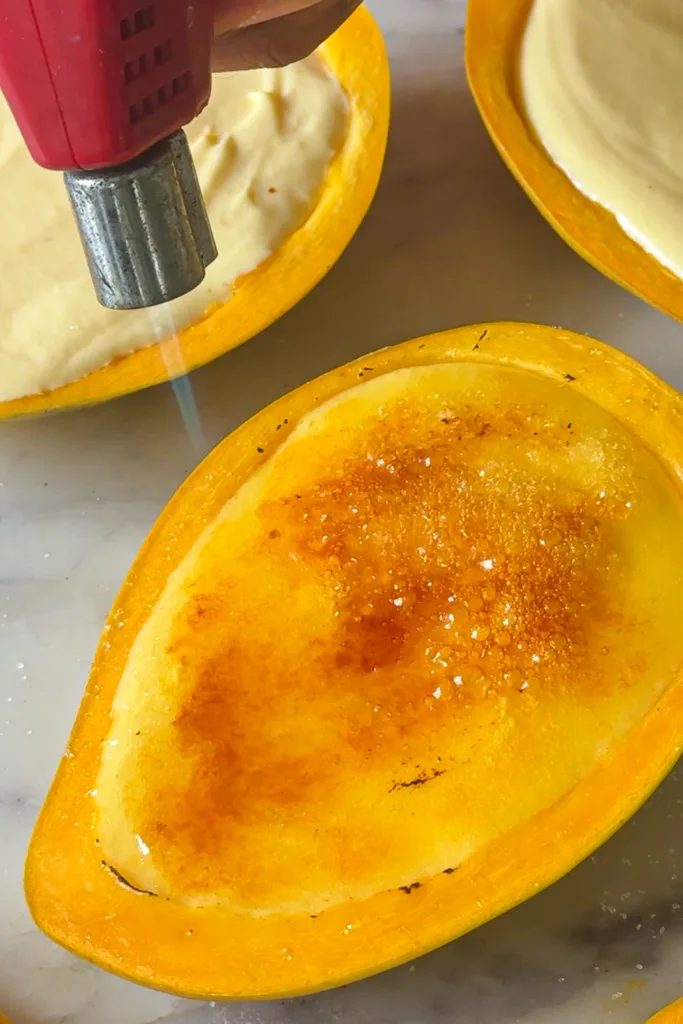
Variations You Can Mess Around With
- Add a pinch of cardamom for a subtle warm spice flavor.
- Mix in coconut cream for a tropical twist.
- Use lime juice instead of lemon for a sharper tang.
- Add chopped fresh mango pieces for extra texture.
- Infuse the cream with vanilla for a smoother flavor.
- Skip the brûlée topping and serve it as a chilled mango cream.
- Layer with biscuit crumbs for a dessert cup version.
Pro Tips for Perfect Results
- Use ripe, sweet mangoes. This ensures the best natural flavor and color.
- Do not boil the cream mixture. Gentle heat prevents splitting and keeps it smooth.
- Stir continuously while heating. This helps dissolve the sugar evenly.
- Add lemon juice off heat. This allows the mixture to thicken properly.
- Chill for enough time. Proper setting gives the best creamy texture.
- Keep the sugar layer thin. This helps create an even brûlée crust.
- Caramelize just before serving. This keeps the top crisp and fresh.
Mango Bango
Ingredients
Equipment
Method
- Slice the mangoes in half along the seed and carefully scoop out the flesh using a spoon, making sure the peels stay intact so they can be used as serving cups.
- Blend the scooped mango flesh into a smooth puree, then measure out 1/3 cup and set it aside for the recipe.
- In a saucepan, combine the whipping cream, sugar, and measured mango puree, then heat gently while stirring until the sugar dissolves and the mixture just begins to bubble at the edges without boiling.
- Remove the saucepan from the heat and immediately stir in the lemon juice, allowing the mixture to begin thickening as it cools into a smooth, creamy consistency.
- Carefully pour the mixture into the prepared mango peel halves, filling each about three-quarters full to prevent spilling during setting.
- Place the filled mango cups in the refrigerator and chill for several hours or overnight until the dessert is fully set and firm.
- Just before serving, sprinkle a thin, even layer of sugar over the surface and caramelize it using a kitchen torch or hot spoon until golden and crisp, then let it cool briefly before serving.
Notes
Nutrition Information
| Nutrient | Amount per Serving |
|---|---|
| Calories | 310 kcal |
| Carbohydrates | 32 gm |
| Fat | 18 gm |
| Protein | 3 gm |
Note: Nutritional values are approximate and may vary depending on ingredient size, quality, brand, location, and the proportions used. All nutritional information is calculated on a per-serving basis.
If you are following a medically restrictive diet, please consult your doctor or registered dietitian before preparing this recipe for personal consumption.
Common Mistakes to Avoid
- Boiling the cream mixture. This can cause it to separate or lose texture.
- Adding lemon juice too early. It needs to go in after removing from heat.
- Overfilling the mango shells. This can cause spills while chilling.
- Not chilling long enough. The dessert needs time to fully set.
- Using unripe mangoes. This affects both flavor and sweetness.
- Burning the sugar topping. Keep heat controlled while caramelizing.
- Making the sugar layer too thick. It won’t crack properly when served.
How I Like to Serve These
- Serve chilled straight from the mango shells.
- Pair with fresh fruit on the side.
- Add a mint leaf for a fresh finish.
- Serve as a light dessert after a heavy meal.
- Plate on a tray for a clean presentation.
- Serve immediately after brûlée topping.
Storage / Leftovers and Next-Day Thoughts
- Store covered in the refrigerator. This keeps the texture fresh.
- Best consumed within two days. The flavor is freshest early.
- Avoid freezing. It can affect the creamy texture.
- Add brûlée topping only before serving. This keeps it crisp.
- Keep refrigerated until ready to serve.
- Stirring is not needed after setting.
- Flavor deepens slightly after resting.
FAQs
Can I use canned mango puree?
Yes, but fresh mango gives a brighter and more natural flavor.
What if I don’t have a torch?
You can use a very hot spoon to caramelize the sugar carefully.
How do I know when it’s set?
It should feel firm but slightly jiggly in the center when chilled.
Can I make this ahead of time?
Yes, it’s ideal for making a day in advance.
Can I skip the brûlée topping?
Yes, it will still taste great as a smooth mango dessert without it.

I’m Emma Parker, the writer and founder behind Emma’s Home Guide. This blog was created to share practical ideas, honest experiences, and helpful guidance for everyday living. My goal is to make home life feel easier, warmer, and more enjoyable, without pressure or perfection.