Red sangria is one of those drinks that instantly sets the mood for a relaxed gathering. It’s fruity, refreshing, and just the right balance of sweet and bold, making it perfect for warm evenings or casual get-togethers.
This classic Spanish-style wine punch combines red wine with fresh fruit and a splash of citrus, creating a drink that feels both vibrant and easygoing. As it chills, the fruit infuses the wine with layers of flavor, giving every sip a slightly different note.
What makes this recipe especially appealing is how simple it is to prepare. You can mix everything ahead of time and let the fridge do the work, which makes it ideal for entertaining without any last-minute effort.
By the time you’re ready to serve, the flavors have blended beautifully, resulting in a drink that tastes like it took far more effort than it actually did.
Why I Keep Making This Red Sangria?
This is one of those recipes that feels effortless but always impresses. It’s easy to prepare, doesn’t require precise measurements, and can be made ahead, which makes hosting much simpler.
The flavor is what keeps me coming back. The combination of red wine, citrus, and fresh fruit creates a drink that’s refreshing without being overly sweet.
I also like how flexible it is. You can adjust the sweetness, swap fruits, or even change the type of wine, and it still turns out great. Another reason this recipe stands out is how it improves over time. Letting it chill allows the fruit to infuse the wine, making the flavor deeper and more balanced.
It’s a reliable, crowd-friendly drink that always feels right for the occasion.
Variations You Can Mess Around With
- Add sliced peaches or nectarines for a softer fruit flavor.
- Use sparkling water or soda for a lighter, bubbly version.
- Swap raspberries with blueberries or blackberries.
- Replace some of the orange slices with blood oranges during winter for deeper citrus flavor and color.
- Add sliced peaches during summer when they’re at peak ripeness.
- Use sparkling water just before serving rather than during chilling to preserve carbonation.
- Replace orange juice with pineapple juice for a tropical twist.
- Try white wine instead for a lighter sangria version.
Pro Tips for Perfect Results
- Choose a wine you would actually drink on its own. Sangria improves wine, but it cannot completely fix poor-quality wine.
- Slice citrus with the peel intact to extract additional oils during chilling.
- Chill for at least 4 hours, though overnight produces the best flavor.
- Add any sparkling ingredients immediately before serving to maintain carbonation.
- Taste the sangria after chilling because sweetness often changes as the fruit infuses.
How to Make Red Sangria?
Ingredients
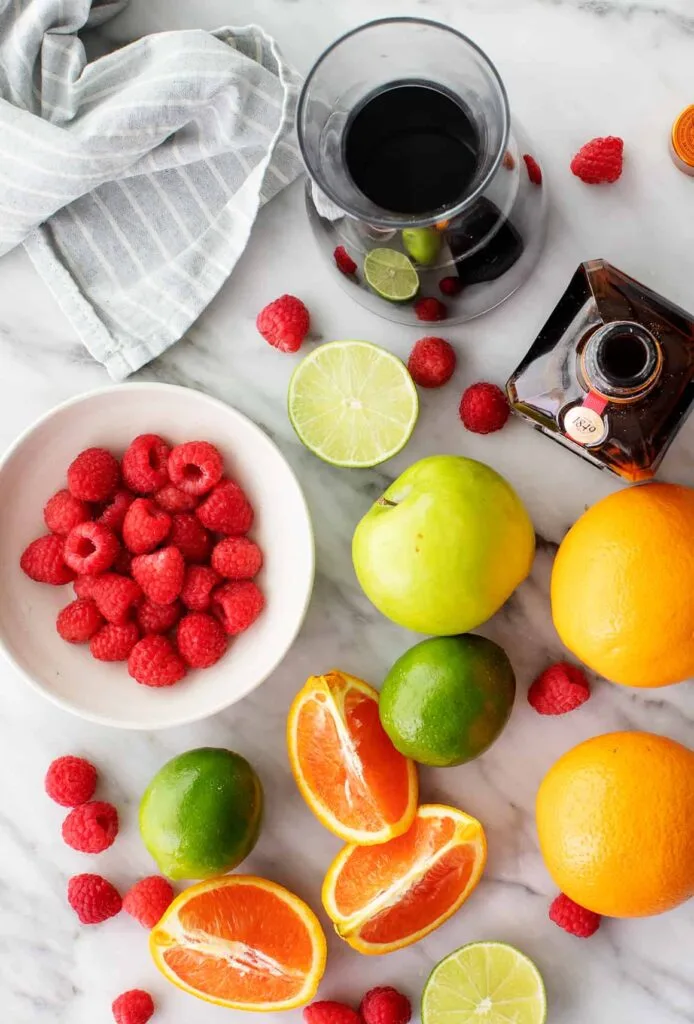
- 1 Granny Smith apple, chopped
- 1 orange, sliced and quartered
- 1 lemon or lime, sliced
- 1/3 cup raspberries or strawberries
- 750 ml red wine (Tempranillo, Garnacha, or Rioja)
- 1/2 cup orange juice
- 1/4 to 1/2 cup Cointreau, Grand Marnier, or brandy
Equipment
- Large pitcher
- Knife and cutting board
- Spoon for stirring
- Measuring cups
Instructions
Step 1:
Place the chopped apple, sliced orange pieces, lemon or lime slices, and berries into a large pitcher, spreading them evenly for balanced flavor distribution.
Step 2:
Pour the red wine over the fruit, followed by the orange juice and your choice of Cointreau, Grand Marnier, or brandy, ensuring everything is evenly combined.
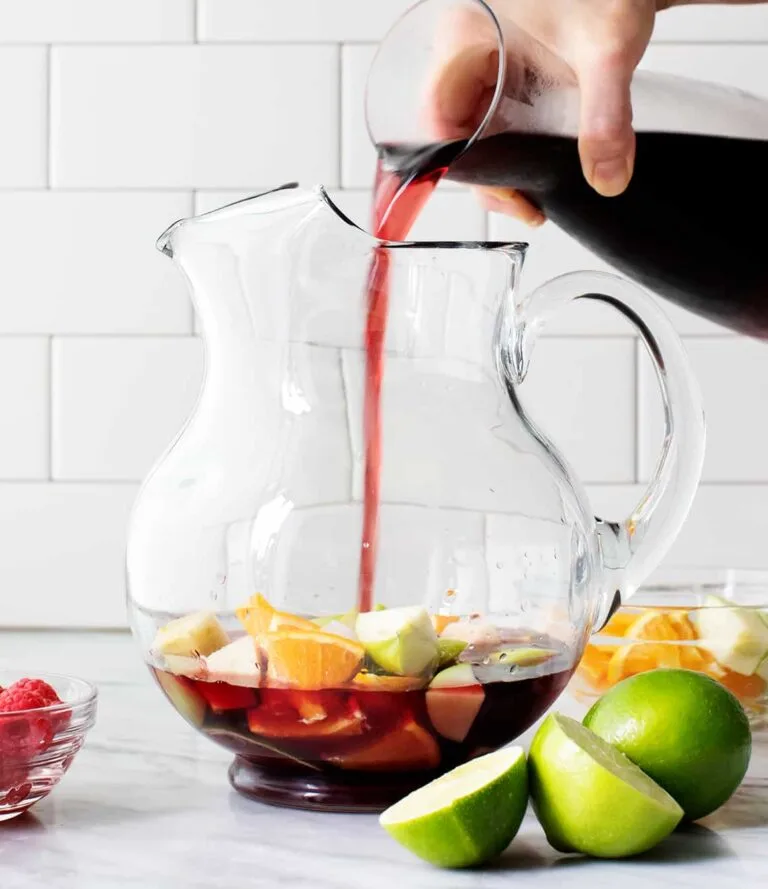
Step 3:
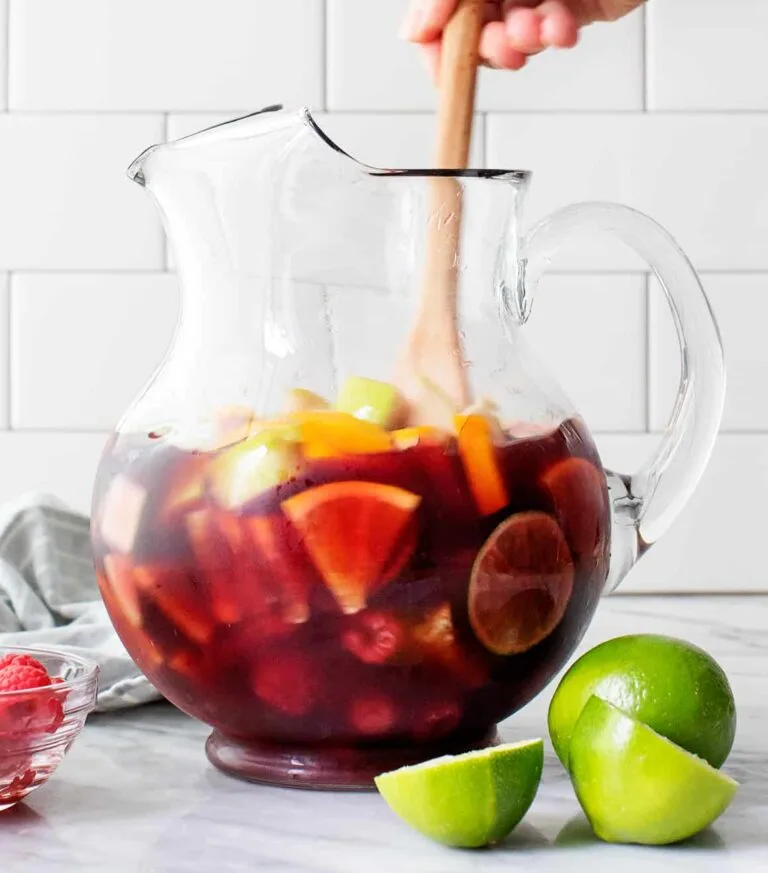
Stir the mixture gently but thoroughly so the fruit and liquids are well mixed without breaking down the fruit too much.
Step 4:
Cover the pitcher and place it in the refrigerator, allowing it to chill for several hours or overnight so the flavors can fully develop.
Step 5:
When ready to serve, give the sangria a gentle stir to redistribute the fruit and infused liquid evenly.
Step 6:
Fill serving glasses with ice and pour the chilled sangria over the ice, making sure to include some fruit in each glass.
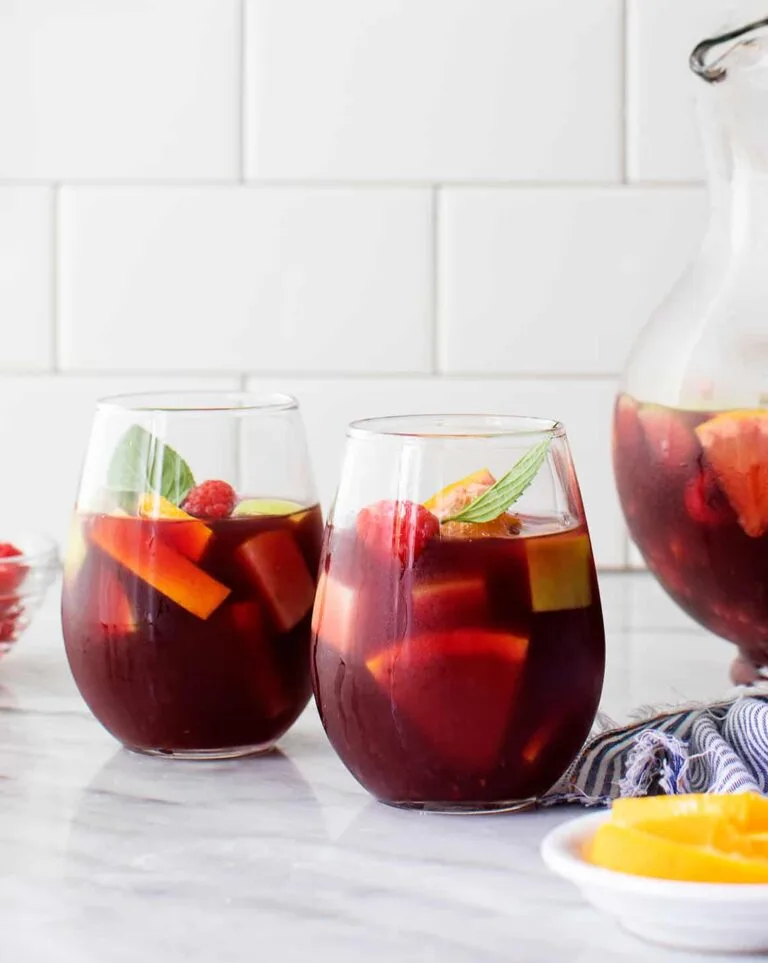
The biggest difference I noticed while testing this recipe was the chilling time. A sangria served after only an hour tasted mostly like wine with fruit added, while an overnight batch developed a much smoother flavor where the citrus, berries, and wine tasted fully integrated.
Sangria Recipe
Ingredients
Equipment
Method
- Place the chopped apple, sliced orange pieces, lemon or lime slices, and berries into a large pitcher, spreading them evenly for balanced flavor distribution.
- Pour the red wine over the fruit, followed by the orange juice and your choice of Cointreau, Grand Marnier, or brandy, ensuring everything is evenly combined.
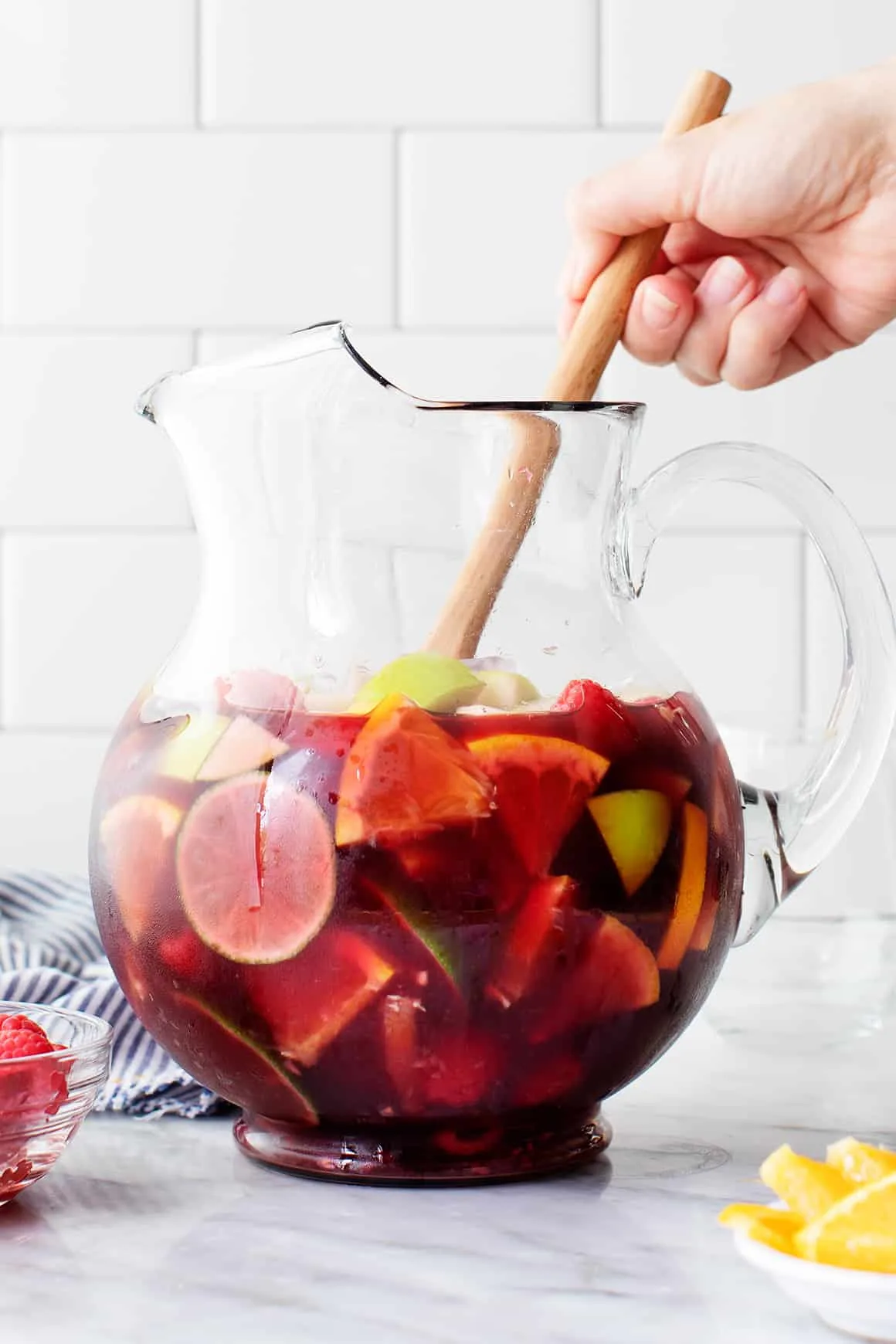
- Stir the mixture gently but thoroughly so the fruit and liquids are well mixed without breaking down the fruit too much.
- Cover the pitcher and place it in the refrigerator, allowing it to chill for several hours or overnight so the flavors can fully develop.
- When ready to serve, give the sangria a gentle stir to redistribute the fruit and infused liquid evenly.
- Fill serving glasses with ice and pour the chilled sangria over the ice, making sure to include some fruit in each glass.
Notes
Use fresh, ripe fruit. This improves taste and aroma.
Add ice only when serving. This prevents dilution while chilling.
Adjust sweetness to taste. Add juice or sweetener if needed.
Stir gently before serving. This evenly distributes the flavors.
Nutrition Information
| Nutrient | Amount per Serving |
|---|---|
| Calories | 180 kcal |
| Carbohydrates | 18 gm |
| Fat | 0 gm |
| Protein | 0 gm |
Note: Nutritional values are approximate and may vary depending on ingredient size, quality, brand, location, and the proportions used. All nutritional information is calculated on a per-serving basis.
If you are following a medically restrictive diet, please consult your doctor or registered dietitian before preparing this recipe for personal consumption.
What Is The Best Wine For Sangria?
Dry, fruit-forward red wines usually work best because they allow the fruit flavors to shine without making the drink overly sweet.
Tempranillo is a classic choice because it has moderate tannins and a smooth finish.
Garnacha adds more fruit-forward notes, while Rioja creates a slightly richer flavor.
Avoid heavily oaked wines, as strong oak flavors can compete with the fresh fruit and citrus.
Common Mistakes to Avoid
- Using sweet wine as the base. Once fruit and juice are added, the drink can become overly sugary.
- Serving immediately after mixing. The flavors need time to develop.
- Adding sparkling water too early. It will lose carbonation during chilling.
- Using overly ripe fruit. Soft fruit can break down and cloud the sangria.
- Leaving the pitcher uncovered. The wine can absorb refrigerator odors.
How Long Should Sangria Chill?
While sangria can technically be served after an hour or two, the flavor becomes noticeably better after several hours.
During testing, I found that the best balance developed after 8 to 12 hours of refrigeration. This gives the fruit enough time to infuse the wine without becoming overly soft.
How I Like to Serve These?
- Serve in large glasses with plenty of ice.
- Add extra fresh fruit to each glass.
- Pair with light appetizers or tapas.
- Serve in a clear pitcher for a colorful presentation.
- Add a splash of sparkling water for a lighter finish.
- Garnish with mint for a fresh touch.
Storage / Leftovers and Next-Day Thoughts
- Store covered in the refrigerator. This keeps it fresh.
- Best enjoyed within two days. Flavor remains balanced.
- Stir before serving leftovers. This redistributes ingredients.
- Add fresh fruit if needed. This refreshes the flavor.
- Avoid leaving at room temperature too long.
- Do not freeze. This affects texture and taste.
- Flavor deepens over time. This can improve taste slightly.
FAQs
Can I make this ahead of time?
Yes, it’s best when made several hours or even a day in advance.
What wine works best?
Dry red wines like Tempranillo, Garnacha, or Rioja are ideal.
Can I make it non-alcoholic?
Yes, use grape juice and sparkling water instead of wine and liquor.
How do I make it sweeter?
Add simple syrup, honey, or extra fruit juice.
Can I use frozen fruit?
Yes, it works well and can also help keep the drink cold.

I’m Emma Parker, the writer and founder behind Emma’s Home Guide. This blog was created to share practical ideas, honest experiences, and helpful guidance for everyday living. My goal is to make home life feel easier, warmer, and more enjoyable, without pressure or perfection.