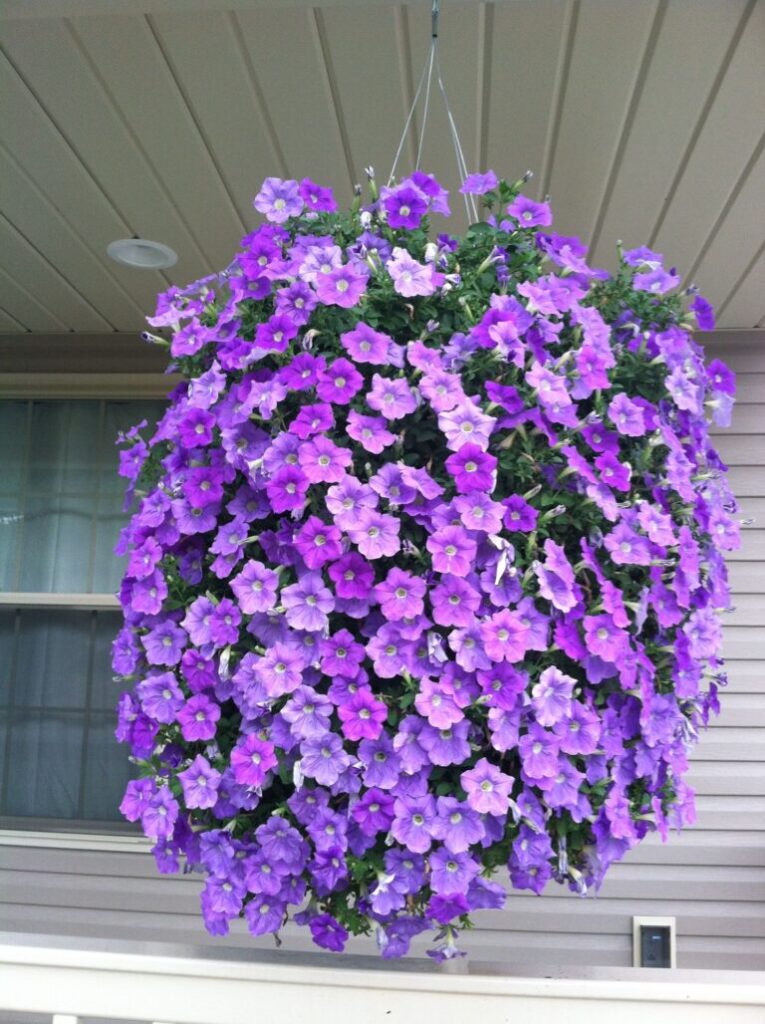
Dreaming of bright, colorful petunias flowing from hanging baskets
Growing them is easy once you understand what they need.
Below you will learn how to choose the right plants, how to plant them, and how to care for them all season long.
Why Plant Petunias in Hangers
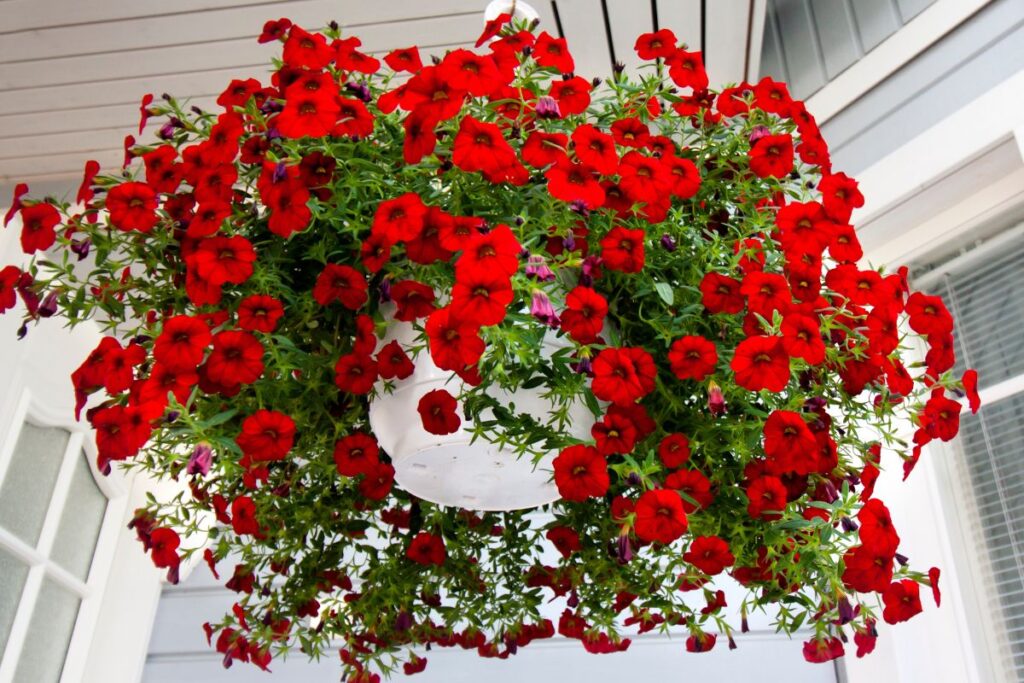
Petunias are great for:
- Attracting butterflies and hummingbirds
- Providing color all summer
- Decorating balconies, patios, and windows
All you need is:
- The right petunia type
- A pot with drainage
- Good soil
- Proper sunlight and watering
Choosing the Best Petunia Types
Different kinds of petunias grow in different ways. Pick one based on the climate and amount of sunlight your space receives.
Wave Petunias
Wave petunias spread widely and spill over the sides of a basket. They bloom all summer and do not need deadheading because they drop old flowers on their own. They are annuals in most places but may survive as perennials in Zone 11.
Supertunias
Supertunias grow in round, full mounds and are perfect for hanging baskets. They are strong, colorful, disease resistant, and love warm weather.
Picking the Ideal Hanging Planter
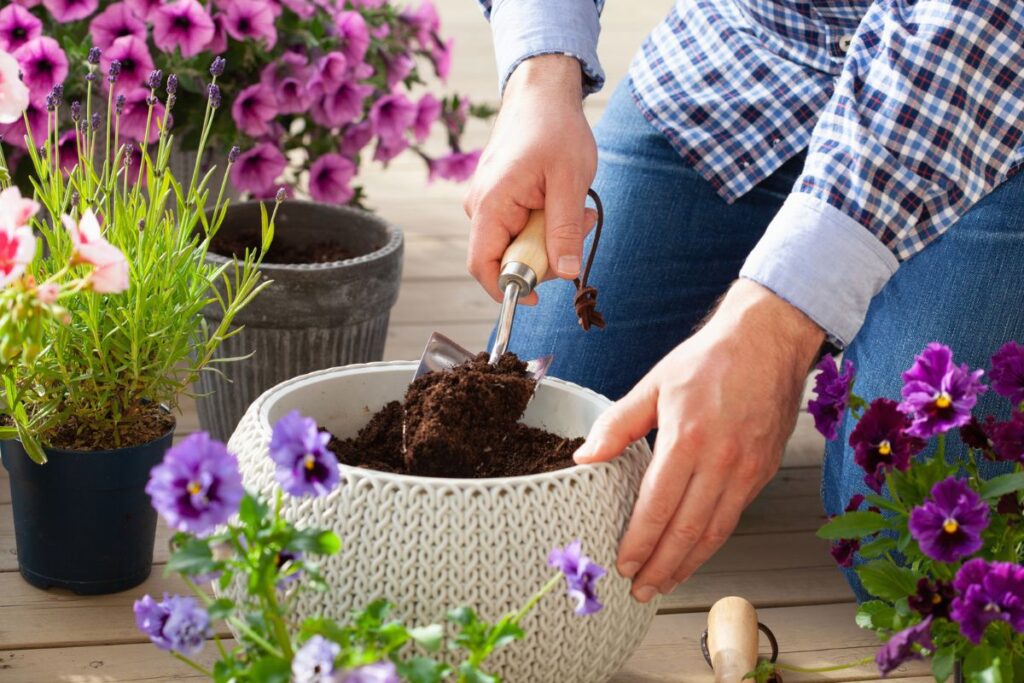
Choose a basket with at least one drainage hole.
Terracotta pots drain well and keep roots healthy.
Plastic pots hold water longer and are easier to move.
Avoid metal planters because they heat up quickly in summer.
You can also make a simple homemade hanging container using rope and any lightweight bucket or pot.
Preparing the Potting Soil
Petunias need light, fast draining soil. Do not use regular garden soil.
Use a ready-made potting mix or make your own using compost, peat moss, and perlite or vermiculite.
Mix a slow-release fertilizer into the soil before planting.
How to Plant Petunias
Best time to plant is late spring or early summer.
Cold weather can damage them, so wait until frost danger has passed.
Steps
- Fill the hanging basket with your prepared soil
- Place the petunia plants inside
- Cover the roots lightly with more soil
- Water until water flows out the bottom of the pot
Spacing
Shade tolerant types: leave about 5 to 6 inches between plants
Sun loving types: leave 10 to 12 inches between plants
Overwintering Petunias
You can keep petunias alive through winter instead of replanting the next year.
Two options
Keep them growing indoors in a bright room and water lightly, or
Let them go dormant in a cool space such as a garage or basement. Keep them out of frost and do not place them in total darkness. They will start growing again in spring.
6 Key Tips for Caring for Hanging Petunias
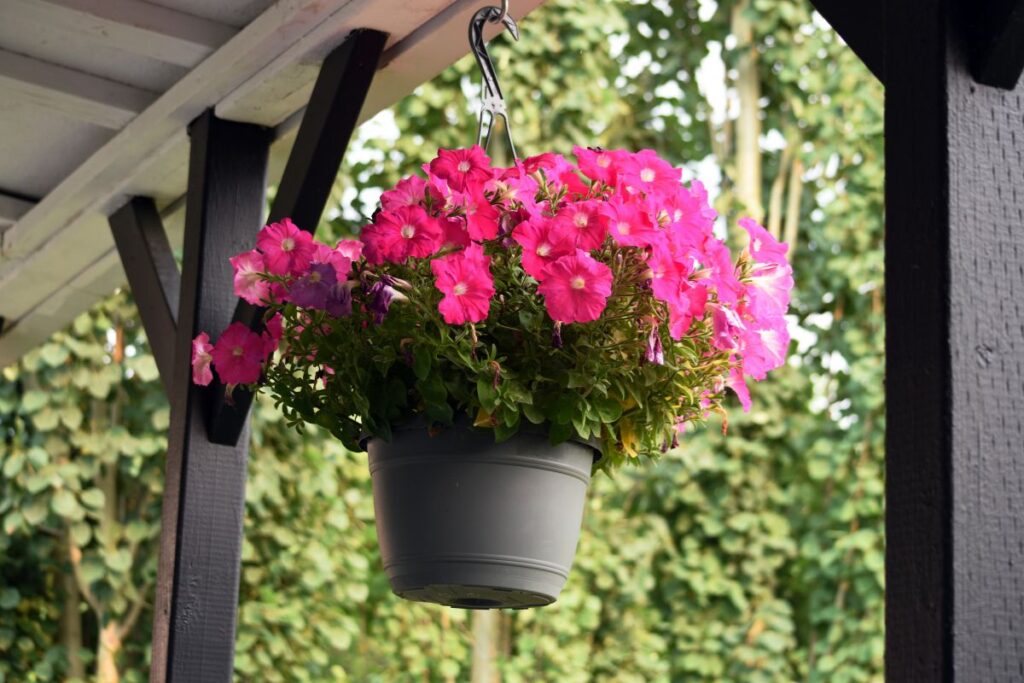
Sunlight
Petunias need full sun for best blooms. They will still grow in light shade but may look long and stretched.
Watering
Hanging baskets dry out faster than ground soil. Water more often, especially in hot weather.
In extreme heat you may need to water twice a day.
Check soil with your fingers. If dry, water until liquid drains from the bottom.
Humidity
Petunias prefer low humidity.
In humid regions, space plants farther apart and water less frequently.
Temperature
Best growing temperatures are 60 to 80 degrees Fahrenheit during the day and 55 to 65 degrees at night.
Temperatures below 40 degrees can harm them, so bring baskets indoors when nights get cold.
Soil And Nutrition
Use fertile soil that drains well.
Add compost or organic matter and a slow release fertilizer at planting time.
Feed with a liquid fertilizer during the flowering season to encourage lots of blooms.
Propagation
You can grow new petunias from seeds or cuttings.
From Cuttings
- Cut a healthy stem below a leaf node
- Remove lower leaves and any flowers
- Dip the cut end in rooting hormone
- Plant in seed starting mix
- Cover to keep humidity high
- Place in bright but indirect light
- Transplant when roots form
From Seeds
- Sow on damp seed mix and cover lightly
- Keep warm until they sprout
- Slowly increase light
- Transplant once they form real leaves
Pruning
- Trim petunias three times during summer.
- Cut back about one third of the plant each time.
- Do this in early July, mid August, and mid September.
- Pruning keeps plants full and blooming.
Best Plants to Grow With Petunias
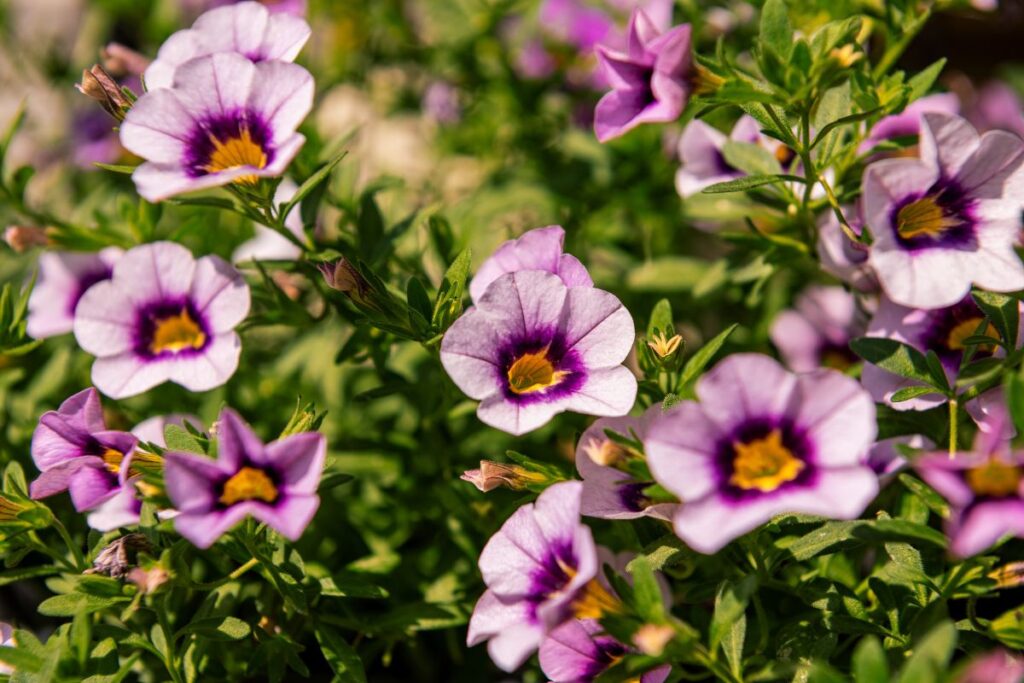
You can combine petunias with other plants in hanging baskets.
Geraniums
Taller flowers that add height and texture. They thrive in the same sunlight and soil conditions.
Calibrachoa
Looks like a small petunia. Adds variety in size and color.
Since petunias grow faster, plant a few more calibrachoa for balance.
Hydrangea Cuttings
An unusual but striking pairing. Hydrangeas add volume while petunias spill over the edges.
Common Pests
Watch for aphids, mealybugs, and spider mites.
Prevention tips
- Check leaves often
- Use ladybugs or plant safe insect oils
- Choose resistant varieties
- Avoid strong chemicals when possible
Conclusion
Growing petunias in hanging baskets is simple and rewarding. Choose a strong flowering variety, use a pot with drainage, plant in well draining soil, and place in full sun. Water regularly, feed during the growing season, and prune to keep flowers coming.
Try pairing petunias with calibrachoa, geraniums, or hydrangeas to create a colorful display. With proper care, your hanging petunias will bloom beautifully all season long.
I’m Emma Parker, the writer and founder behind Emma’s Home Guide. This blog was created to share practical ideas, honest experiences, and helpful guidance for everyday living. My goal is to make home life feel easier, warmer, and more enjoyable, without pressure or perfection.