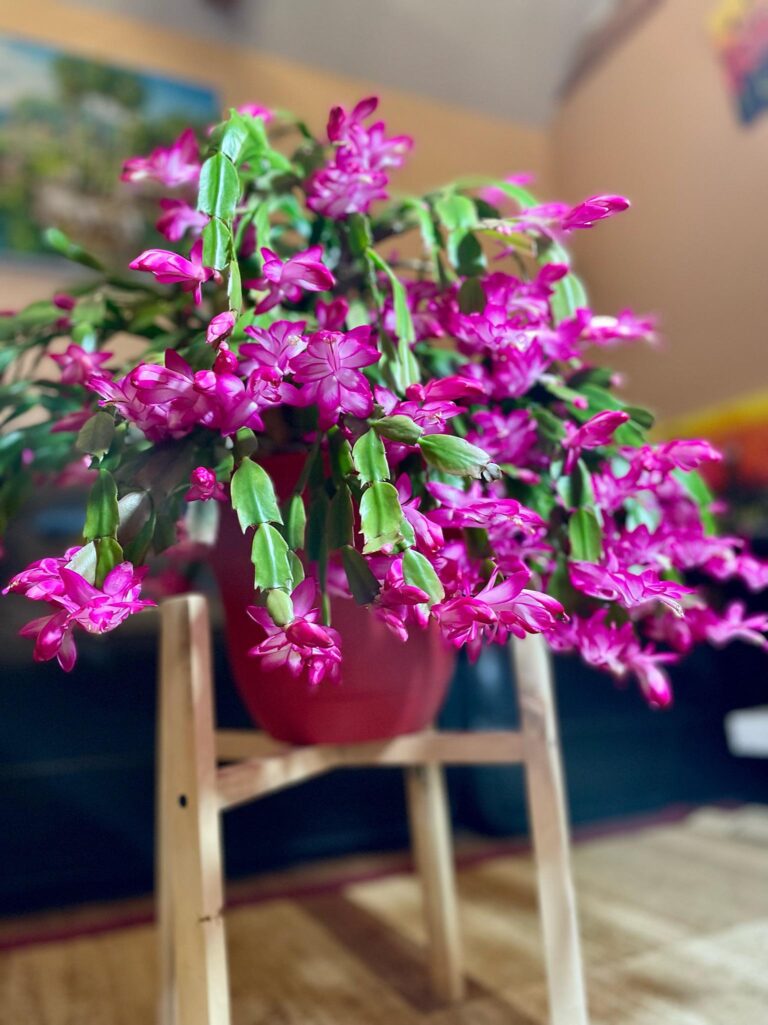
The Christmas cactus (Schlumbergera bridgesii) is a delightful plant, known for its simplicity and colorful winter blooms.
If yours seems unhappy, it may be due to too much attention. Unlike many houseplants, this cactus thrives on light care, prefers less water, and grows well when slightly rootbound.
Here is how to bring it back to life and enjoy its seasonal flowers.
Overwatering Woes
Christmas cacti are succulents and epiphytes that store moisture well, which means they do not need frequent watering.
Too much water causes root rot. Use a pot with drainage holes, water only when the soil feels dry, and always empty excess water from saucers. Never let your cactus sit in standing water.
Choosing the Right Soil
Regular potting soil is too dense for this plant. Instead, choose a loose growing medium that allows airflow. Use lightweight expanded clay aggregate, or mix two parts potting soil with one part clean sand.
Another option is a blend of 40 percent perlite and 60 percent peat moss, though peat moss may require more frequent repotting.
Proper Pot Sizing
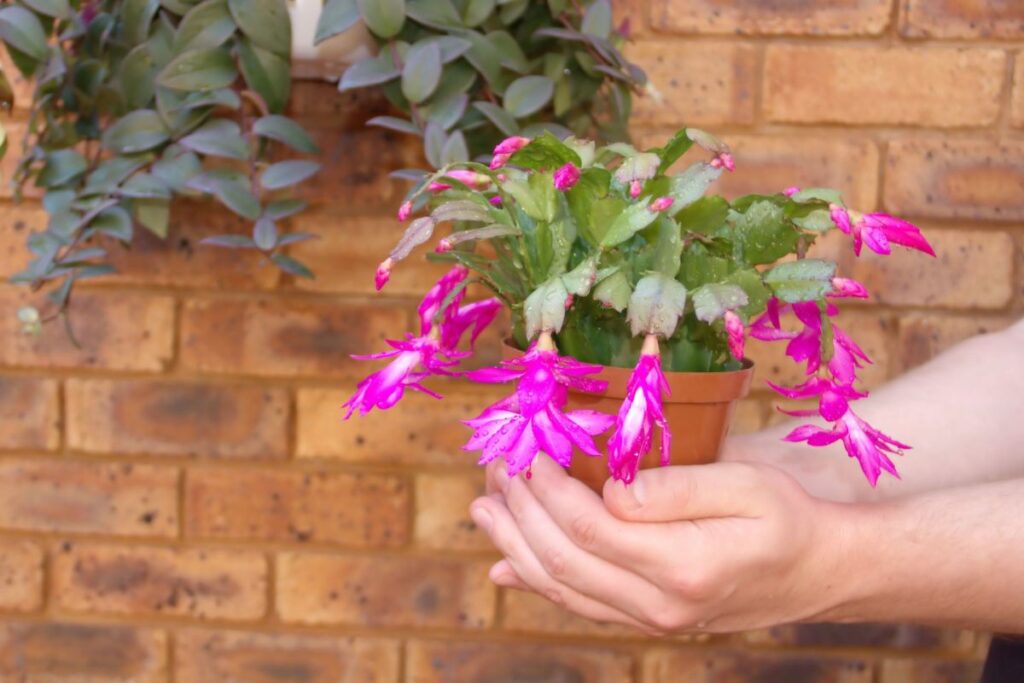
Christmas cacti prefer snug roots. Do not rush to repot unless roots are growing through drainage holes.
Typically, repot every three years. When you do, choose a container only one inch wider than the current pot and leave the top inch of space between the soil and rim.
Maintaining Adequate Humidity
These plants originate from the rainforests of Brazil, where humidity is naturally high. Aim for 50 to 60 percent humidity.
Increase moisture by misting, placing the plant near a humidifier, setting up a pebble tray, or temporarily placing it in a steamy bathroom.
Managing Temperature
Despite the name, Christmas cacti like warmth. Keep indoor temperatures between 70 and 80 degrees Fahrenheit before buds appear.
Avoid cold drafts and do not leave the plant on chilly windowsills. Watch for artificial drafts from heaters, air conditioners, and dehumidifiers.
Feeding Your Plant
After blooming, feed your cactus monthly with a balanced fertilizer such as 10-10-10 or 20-20-20 diluted to half strength.
Fertilize from spring until September, pause during bud and flower formation, then resume after blooming. Kitchen scraps can also be used sparingly as an additional nutrient source.
Pruning for Shape and Growth
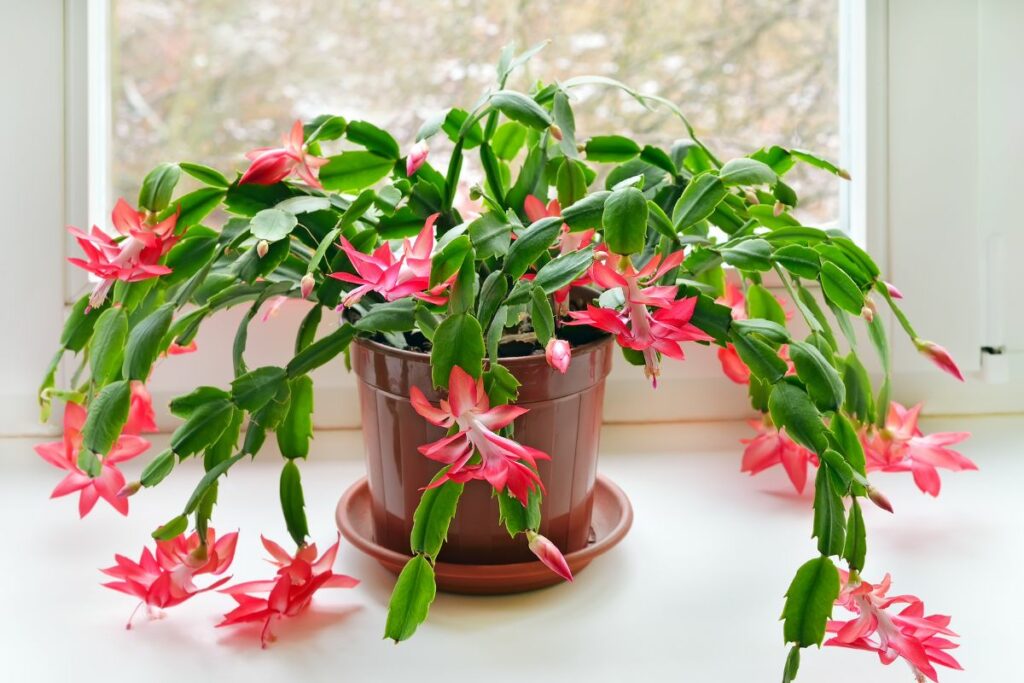
Prune once flowering is finished. Snipping back leaf segments maintains a compact shape and encourages new growth.
Use the trimmed sections to propagate fresh plants in a small pot with well draining soil and plenty of indirect light.
Ensuring Dormancy for Blooming
Christmas cacti require a rest period to produce flowers. Create a dormancy cycle of about 13 hours of darkness daily starting in October. Move the plant to a cool, dark closet or cover it in the evening so it receives limited light.
Avoiding Bud Drop
Once buds form, stability is essential. Avoid moving the plant, changing rooms, altering light sources, or shifting temperatures. Environmental changes can cause buds to fall before they bloom.
Optimizing Lighting
Provide ample indirect light, ideally in an east facing window. Avoid direct midday sun, which can scorch leaves. Too much shade will prevent blooms, so balance is key.
By learning what this plant prefers and avoiding these common mistakes, you can keep your Christmas cactus thriving and enjoy its brilliant flowers every winter.

I’m Emma Parker, the writer and founder behind Emma’s Home Guide. This blog was created to share practical ideas, honest experiences, and helpful guidance for everyday living. My goal is to make home life feel easier, warmer, and more enjoyable, without pressure or perfection.