

Cabbage Kimchi is one of those recipes that transforms simple ingredients into something bold, complex, and deeply flavorful. Made with napa cabbage, garlic, ginger, and Korean chili flakes, this traditional fermented dish develops a tangy, slightly spicy character that only gets better with time.
What makes kimchi so special is the fermentation process. As it sits, the flavors evolve, becoming richer, deeper, and more balanced. The cabbage softens slightly while still keeping a satisfying bite, and the seasoning turns into a vibrant, savory coating that clings to every piece.
It’s also incredibly versatile. A small serving can completely change a meal, whether you add it to rice bowls, noodles, or even simple eggs.
While it may seem like a project at first, the process is actually straightforward and rewarding. Once you make it yourself, it becomes a staple you’ll want to keep stocked in your fridge.
Why I Keep Making This Cabbage Kimchi
This recipe is simple at its core but delivers bold, layered flavors that store-bought versions often lack.
I like that it can be adjusted easily, whether you want it milder or more intensely spicy.
The fermentation process makes it feel like something that improves over time, which is always satisfying.
It’s also a practical recipe. Once made, it lasts for weeks and adds instant flavor to everyday meals.
Most importantly, it’s consistent. With just a few ingredients and a little patience, you get reliable, delicious results every time.
What Kind of Cabbage Should I Use?
This recipe uses napa cabbage, which is the best choice for kimchi. It has soft leaves and a mild flavor that soaks up the seasoning really well.
If you cannot find napa cabbage, regular green cabbage can work, but the texture will be a little firmer. Napa cabbage is still the best option if you can get it.
Variations You Can Mess Around With
- Add grated carrot for extra sweetness and color.
- Use pear or apple for a subtle natural sweetness.
- Replace fish sauce with soy sauce for a vegetarian version.
- Add chili paste for deeper heat and richness.
- Mix in garlic chives for a more traditional flavor.
- Use less gochugaru for a milder batch.
- Add a splash of rice vinegar for extra tang.
Understanding the Fermentation Process
Fermentation is what transforms seasoned cabbage into kimchi.
During fermentation, naturally occurring beneficial bacteria consume sugars within the vegetables and produce lactic acid. This process creates the tangy flavor, helps preserve the vegetables, and develops the complex taste that kimchi is known for.
Pro Tips for Perfect Results
- Use napa cabbage. It has the right texture for fermentation.
- Massage the salt thoroughly. This helps soften the leaves properly.
- Rinse well but do not oversoak. You want balanced seasoning.
- Squeeze out excess water before mixing. This prevents dilution.
- Keep vegetables submerged in liquid. This is key for proper fermentation.
- Taste daily while fermenting. This helps you stop at the perfect point.
- Use clean jars. This prevents unwanted bacteria.
How To Make Cabbage Kimchi?
Equipment
- Large mixing bowl
- Colander
- Knife and cutting board
- Gloves
- Glass jar with lid
Ingredients
- 1 medium head napa cabbage (about 2 pounds)
- 1/4 cup iodine-free sea salt or kosher salt
- Water, preferably distilled or filtered
- 1 tablespoon grated garlic
- 1 teaspoon grated peeled fresh ginger
- 1 teaspoon granulated sugar
- 2 tablespoons fish sauce or salted shrimp paste, or 3 tablespoons water
- 1 to 5 tablespoons Korean red pepper flakes (gochugaru)
- 8 ounces Korean radish or daikon radish, peeled and cut into matchsticks
- 4 medium scallions, trimmed and cut into 1-inch pieces
Instructions
Step 1:
Cut the cabbage lengthwise into quarters through the stem. Remove the cores, then slice each section into 2 inch wide strips.
Step 2:
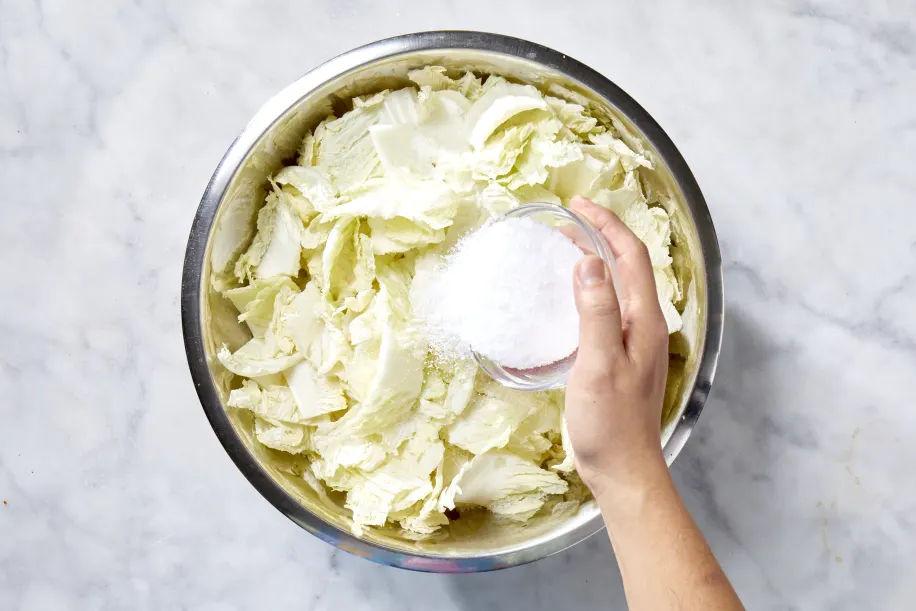
Place the cabbage in a large bowl and sprinkle with the salt. Use your hands to gently massage the salt into the leaves until they begin to soften. Add enough water to fully cover the cabbage. Place a plate on top and weigh it down with something heavy. Let it sit for 1 to 2 hours.
Step 3:
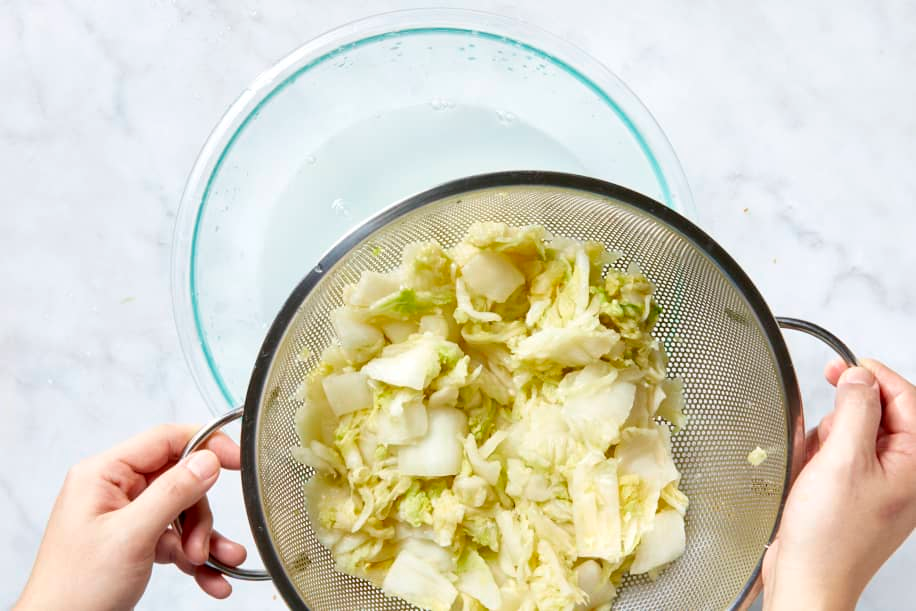
Rinse the cabbage under cold water three times to remove excess salt. Let it drain in a colander for 15 to 20 minutes.
Step 4:
In a clean bowl, make the spice paste. Mix the garlic, ginger, sugar, and fish sauce (or shrimp paste or water) until smooth. Stir in the gochugaru based on how spicy you want it.
Step 5:
Gently squeeze any extra water from the cabbage and add it to the bowl with the paste. Add the radish and scallions.
Step 6:
Using your hands, mix everything together until the vegetables are fully coated with the paste. Wearing gloves helps protect your hands from the spice.

Step 7:
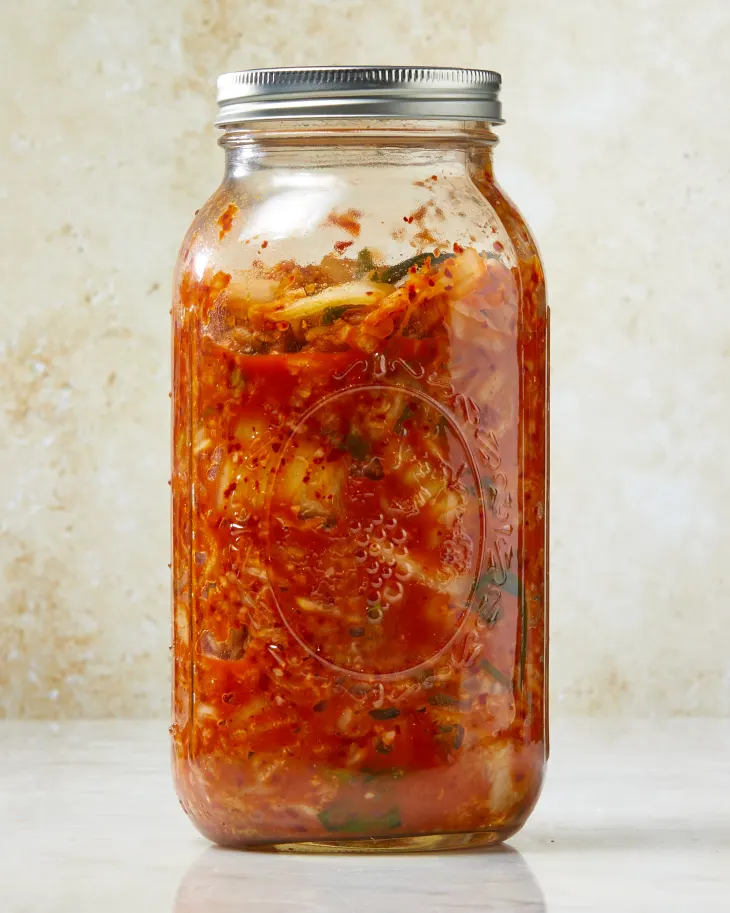
Pack the kimchi into a clean 1 quart jar. Press it down firmly until the liquid rises and covers the vegetables. Leave about 1 inch of space at the top, then seal the jar.

Step 8:
Place the jar on a plate to catch any overflow. Let it sit at cool room temperature, away from direct sunlight, for 1 to 5 days. You may notice bubbles forming as it ferments.
Step 9:
Check the kimchi once a day. Open the jar and press the vegetables down so they stay under the liquid. Taste a little each day. When it reaches a flavor you like, move it to the refrigerator. It will taste even better after another week or two.
Beginner Fermentation Tips
If this is your first time making kimchi, keep these tips in mind:
- Fermentation is usually slower in cooler weather.
- Taste daily rather than relying solely on timing.
- Slight bubbling is a good sign.
- Always use clean utensils when serving.
- Keep vegetables pressed below the liquid.
- Refrigeration slows fermentation significantly.
Kimchi is surprisingly forgiving, which makes it a great introduction to fermentation.
Cabbage Kimchi
Ingredients
Equipment
Method
- Cut the cabbage lengthwise into quarters through the stem. Remove the cores, then slice each section into 2 inch wide strips.
- Place the cabbage in a large bowl and sprinkle with the salt. Use your hands to gently massage the salt into the leaves until they begin to soften. Add enough water to fully cover the cabbage. Place a plate on top and weigh it down with something heavy. Let it sit for 1 to 2 hours.
- Rinse the cabbage under cold water three times to remove excess salt. Let it drain in a colander for 15 to 20 minutes.
- In a clean bowl, make the spice paste. Mix the garlic, ginger, sugar, and fish sauce (or shrimp paste or water) until smooth. Stir in the gochugaru based on how spicy you want it.
- Gently squeeze any extra water from the cabbage and add it to the bowl with the paste. Add the radish and scallions.
- Using your hands, mix everything together until the vegetables are fully coated with the paste. Wearing gloves helps protect your hands from the spice.
- Pack the kimchi into a clean 1 quart jar. Press it down firmly until the liquid rises and covers the vegetables. Leave about 1 inch of space at the top, then seal the jar.
- Place the jar on a plate to catch any overflow. Let it sit at cool room temperature, away from direct sunlight, for 1 to 5 days. You may notice bubbles forming as it ferments.
- Check the kimchi once a day. Open the jar and press the vegetables down so they stay under the liquid. Taste a little each day. When it reaches a flavor you like, move it to the refrigerator. It will taste even better after another week or two.
Notes
- Making kimchi at home is one of those kitchen projects that feels both simple and rewarding.
- Once you taste the depth of flavor and see how versatile it is, it quickly becomes something you’ll want to keep on hand all the time
Nutritional Information
| Nutrient | Amount |
|---|---|
| Calories | 31 kcal |
| Carbohydrates | 6 g |
| Fat | 0.3 g |
| Protein | 2.5 g |
Note: Nutritional values are approximate and may vary depending on ingredient size, quality, brand, location, and the proportions used. All nutritional information is calculated on a per-serving basis.
If you are following a medically restrictive diet, please consult your doctor or registered dietitian before preparing this recipe for personal consumption.
Common Mistakes to Avoid
- Skipping the salting step. This affects texture and fermentation.
- Not rinsing properly. This can make the kimchi too salty.
- Leaving vegetables exposed. They must stay submerged.
- Using dirty containers. This can spoil the batch.
- Fermenting too long at warm temperatures. This can overpower the flavor.
- Adding too much spice at once. Adjust gradually instead.
- Not tasting during fermentation. This can lead to over-fermentation.
How I Like to Serve This
- Serve alongside rice bowls for added flavor.
- Add to noodles for a quick upgrade.
- Use as a topping for eggs or omelets.
- Mix into fried rice for a bold twist.
- Serve with grilled meats for contrast.
- Add to sandwiches for a tangy crunch.
Storage / Leftovers and Next-Day Thoughts
- Store in the refrigerator once fermentation reaches your liking.
- Keep in an airtight container to maintain freshness.
- Flavor continues to develop over time in the fridge.
- Use within a few weeks for best taste.
- Always keep vegetables submerged in liquid.
- Open carefully as gases may build up.
- Stir or press down occasionally to maintain texture.
Final Thoughts
Making kimchi at home is one of the most rewarding ways to explore fermentation. The process is simple, the ingredients are accessible, and the result is a flavorful condiment that can elevate countless meals.
What begins as a bowl of seasoned cabbage gradually transforms into something far more complex through fermentation. Whether you enjoy it fresh and crunchy or deeply tangy after several weeks, homemade kimchi offers a flavor experience that continues to evolve long after the jar is sealed.
Once you’ve made a batch yourself, you’ll understand why so many people keep a container of kimchi in their refrigerator year-round.
FAQs
How long does kimchi need to ferment?
It typically ferments for 1 to 5 days at room temperature, depending on your preference.
Can I make this vegetarian?
Yes, simply replace fish sauce with water or soy sauce.
Why is my kimchi bubbling?
This is a normal part of fermentation and shows that it is developing properly.
How do I know when it is ready?
Taste it daily. Once it reaches your preferred tanginess, move it to the fridge.
Can I store kimchi for a long time?
Yes, it can last for weeks in the refrigerator, and the flavor will continue to evolve.

I’m Emma Parker, the writer and founder behind Emma’s Home Guide. This blog was created to share practical ideas, honest experiences, and helpful guidance for everyday living. My goal is to make home life feel easier, warmer, and more enjoyable, without pressure or perfection.