
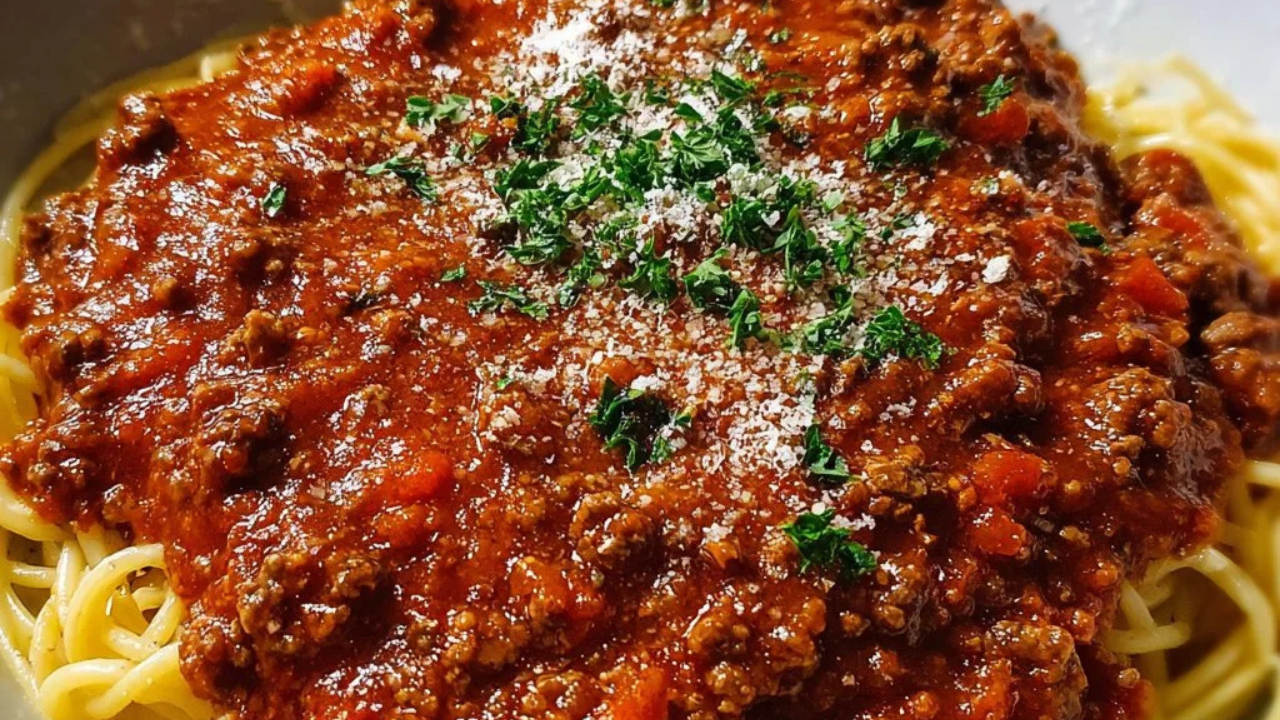
Some recipes don’t need reinventing, they simply stand the test of time. This 130-year-old Italian spaghetti sauce is one of those classics, built on simple ingredients and slow, steady cooking that brings out deep, familiar flavors.
At its core, this sauce is all about balance. The richness of tomatoes, the sweetness of onions, and the gentle aroma of garlic come together to create something that feels both comforting and timeless.
It’s the kind of sauce that doesn’t rely on complexity, but instead lets each ingredient shine.
As it simmers, the flavors meld into a smooth, hearty sauce that feels like it’s been passed down through generations.
The herbs add warmth and depth, while a touch of sugar can soften the acidity just enough to round everything out.
What makes this recipe special is its simplicity. There’s no need for complicated techniques or hard-to-find ingredients. It’s straightforward, reliable, and delivers consistent results every time.
Whether you’re cooking a quick weeknight dinner or preparing a meal to share, this sauce brings that unmistakable homemade quality that never goes out of style.
Why I Keep Making This 130-Year-Old Italian Spaghetti Sauce?
This is one of those recipes that becomes a staple without even trying. It’s simple, dependable, and always delivers that comforting, homemade flavor that works for any occasion.
The beauty of this sauce lies in how easily it comes together. With just a handful of ingredients, you can create something that tastes rich and well-developed, especially after a gentle simmer.
I also appreciate how versatile it is. It works perfectly over pasta, but it can just as easily be used in other dishes like lasagna or as a base for different sauces.
The slow simmering process is what really makes a difference. It allows the flavors to blend naturally, creating a sauce that feels deeper and more balanced with very little effort.
It’s a recipe that feels familiar, reliable, and worth coming back to, especially when you want something that simply works.
Variations You Can Mess Around With
- Add crushed red pepper flakes for a subtle heat.
- Stir in a splash of cream for a richer texture.
- Add sautéed mushrooms for an earthy flavor.
- Use fresh basil instead of dried for a brighter taste.
- Add ground meat for a heartier sauce.
- Include a splash of red wine for added depth.
- Mix in grated parmesan before serving for extra richness.
Pro Tips for Perfect Results
- Cook onions until fully softened for natural sweetness.
- Do not rush the simmering process.
- Stir occasionally to prevent sticking.
- Taste and adjust seasoning at the end.
- Use good-quality crushed tomatoes for best flavor.
- Add water gradually if needed to adjust consistency.
- Keep heat low to maintain a gentle simmer.
How to Make 130-Year-Old Italian Spaghetti Sauce?
Ingredients
- 4 cups crushed tomatoes
- 1 cup diced onion
- 2 cloves garlic, minced
- 1 tbsp olive oil
- 1 tsp dried oregano
- 1 tsp dried basil
- Salt and pepper to taste
- 1 tsp sugar (optional)
Equipment
- Large pot
- Wooden spoon
- Knife and cutting board
- Measuring cups and spoons
Instructions
Step 1:
Heat the olive oil in a large pot over medium heat until it is warm and ready for cooking.
Step 2:
Add the diced onion and cook while stirring occasionally until it softens and becomes translucent.
Step 3:
Stir in the minced garlic and cook briefly, making sure to stir gently so it does not burn.
Step 4:
Pour in the crushed tomatoes and mix well so the base of the sauce is evenly combined.
Step 5:
Add the dried oregano, basil, salt, pepper, and sugar if using, then stir to distribute the seasonings evenly.
Step 6:
Bring the sauce to a gentle simmer, allowing the flavors to begin developing.
Step 7:
Reduce the heat and let the sauce simmer slowly, stirring occasionally to prevent sticking and to help the flavors deepen.
Step 8:
If the sauce becomes too thick, add a small amount of water gradually until the desired consistency is reached.
Step 9:
Taste the sauce and adjust the seasoning as needed before serving.
Step 10:
Serve over freshly cooked spaghetti or use as desired.
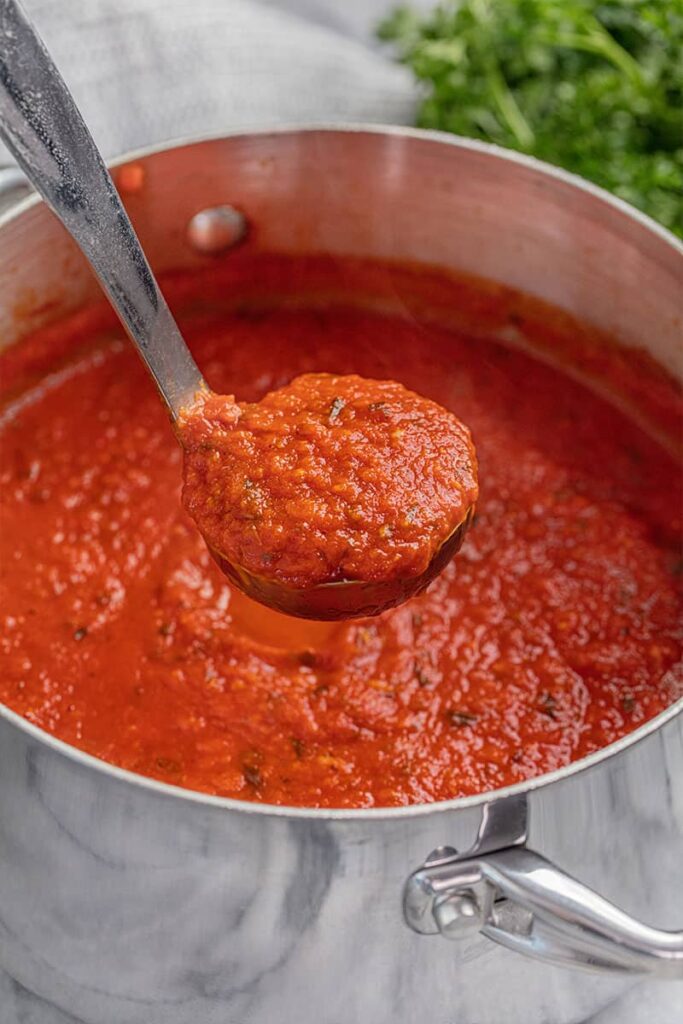
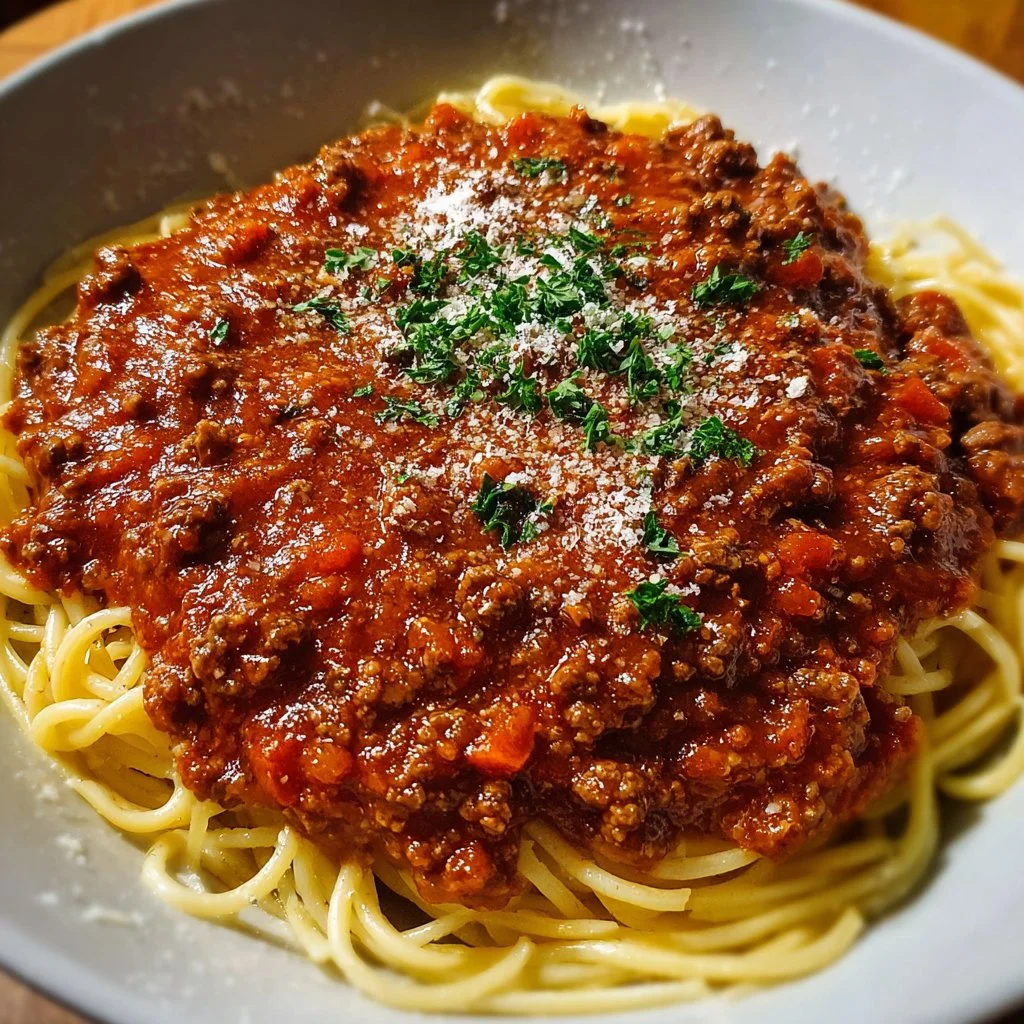
130-Year-Old Italian Spaghetti Sauce Recipe
Ingredients
Equipment
Method
- Heat the olive oil in a large pot over medium heat until it is warm and ready for cooking.
- Add the diced onion and cook while stirring occasionally until it softens and becomes translucent.
- Stir in the minced garlic and cook briefly, making sure to stir gently so it does not burn.
- Pour in the crushed tomatoes and mix well so the base of the sauce is evenly combined.
- Add the dried oregano, basil, salt, pepper, and sugar if using, then stir to distribute the seasonings evenly.
- Bring the sauce to a gentle simmer, allowing the flavors to begin developing.
- Reduce the heat and let the sauce simmer slowly, stirring occasionally to prevent sticking and to help the flavors deepen.
- If the sauce becomes too thick, add a small amount of water gradually until the desired consistency is reached.
- Taste the sauce and adjust the seasoning as needed before serving.
- Serve over freshly cooked spaghetti or use as desired.
Nutrition Information
| Nutrient | Amount per Serving |
|---|---|
| Calories | 150 kcal |
| Carbohydrates | 18 gm |
| Fat | 6 gm |
| Protein | 3 gm |
Note: Nutritional values are approximate and may vary depending on ingredient size, quality, brand, location, and the proportions used. All nutritional information is calculated on a per-serving basis.
If you are following a medically restrictive diet, please consult your doctor or registered dietitian before preparing this recipe for personal consumption.
Common Mistakes to Avoid
- Cooking on high heat, which can burn the sauce.
- Skipping the simmering time, resulting in less developed flavor.
- Not stirring occasionally, causing sticking at the bottom.
- Using low-quality tomatoes, which affects taste.
- Over-seasoning too early without tasting.
- Adding too much water at once.
- Burning the garlic, which creates bitterness.
How I Like to Serve These
- Serve over classic spaghetti for a traditional meal.
- Pair with garlic bread on the side.
- Use as a base for lasagna or baked pasta dishes.
- Spoon over meatballs for a hearty option.
- Add fresh basil on top before serving.
- Sprinkle with parmesan cheese for extra flavor.
Storage / Leftovers and Next-Day Thoughts
- Store in an airtight container in the refrigerator.
- Keeps well for several days.
- Reheat gently on the stove for best results.
- Add a splash of water if it thickens too much.
- Flavors deepen and improve the next day.
- Can be frozen for longer storage.
- Portion before freezing for convenience.
FAQs
Can I use fresh tomatoes instead of canned?
Yes, you can use fresh tomatoes, but you may need to cook them longer to achieve the same consistency.
Do I have to add sugar?
No, it is optional and only used to balance acidity if needed.
Can I make this sauce ahead of time?
Yes, it stores well and often tastes even better the next day.
What pasta works best with this sauce?
Spaghetti is classic, but it works well with most pasta shapes.
Can I make it thicker?
Yes, simply simmer it longer to reduce excess liquid.

I’m Emma Parker, the writer and founder behind Emma’s Home Guide. This blog was created to share practical ideas, honest experiences, and helpful guidance for everyday living. My goal is to make home life feel easier, warmer, and more enjoyable, without pressure or perfection.