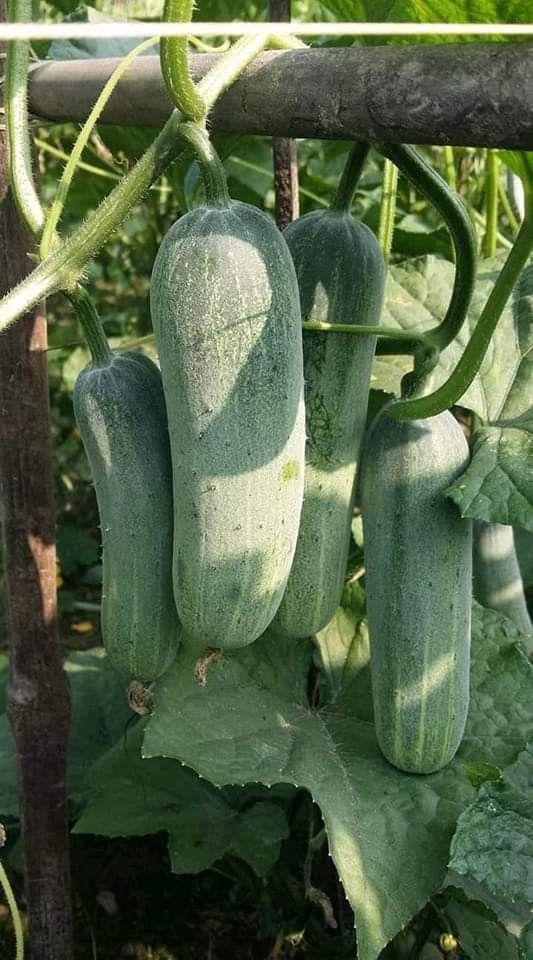
Growing up, I always thought cucumbers were something you had to buy at the grocery store. My first attempts at growing them were pretty disappointing, just a few small cucumbers that did not look anything like the ones from the store.
It was not until my neighbor shared some simple tips that everything changed.
Now I have not bought a cucumber in three years, and my garden produces more than enough for fresh salads, pickles, and sharing with friends. The best part is that it is not complicated at all.
With just a few basic tricks, anyone can grow cucumbers that are better than what you will find at any supermarket.
1. Choose a Cucumber Variety
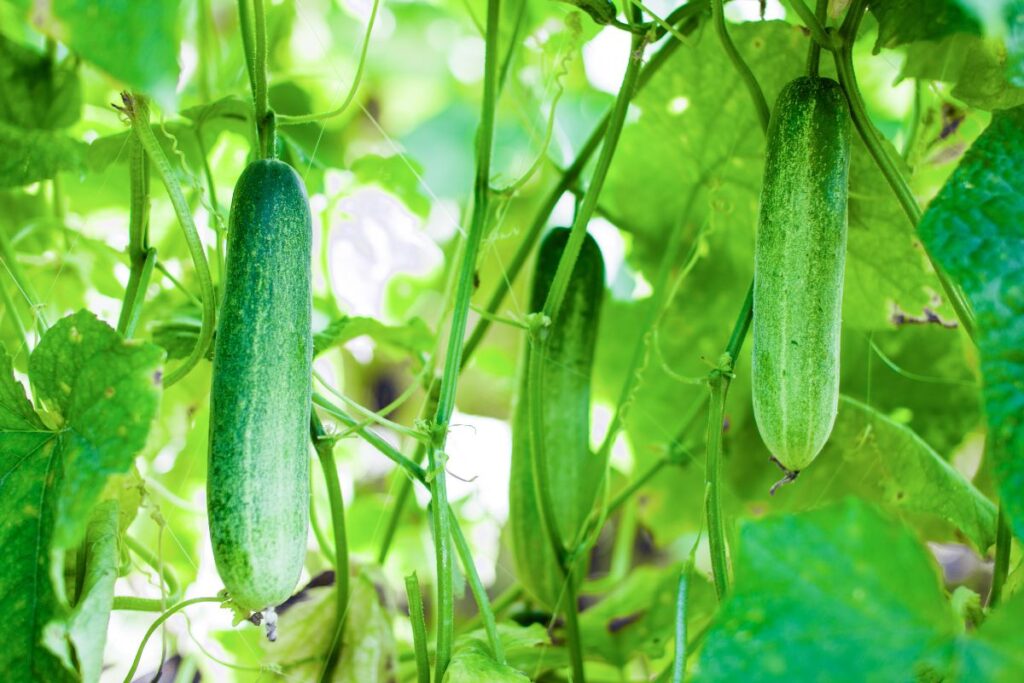
When selecting the type of cucumber for your garden, consider the growth habit, bush or vining. For a trellis setup, choose vining cucumbers, which naturally climb and secure themselves.
These climbers tend to produce a more abundant harvest compared to their bush counterparts.
2. Design Your Trellis
As you plan the framework for your trellis, consider the shape, your garden’s size, and how you want it to look. Functionality matters too. Tight spaces may work best with a simple upright trellis, though spotting and gathering cucumbers can be more difficult.
If you have more room, an arch or A-frame trellis makes harvesting easier and gives plants plenty of climbing space. The right structure supports healthy growth and keeps your garden looking organized.
3. Trellis Durability
When building your trellis, choose sturdy materials to prevent bending or breaking under the weight of growing cucumbers. A strong wooden frame works well. For DIY options, cattle panels or PVC pipes are great choices. These ensure long-lasting support for your plants.
4. Determine Trellis Height
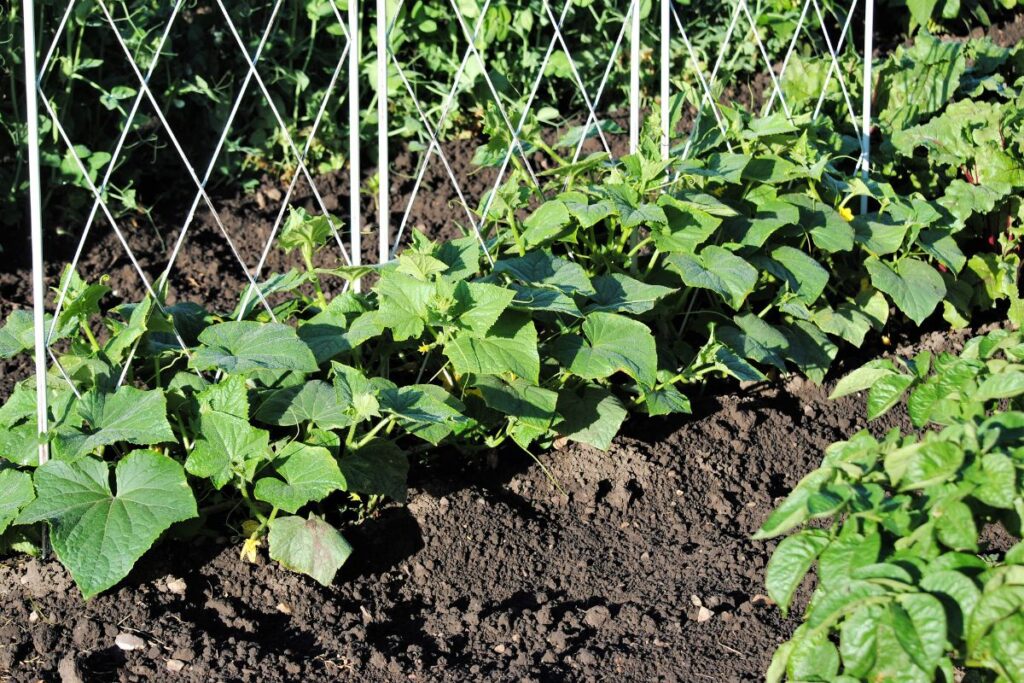
Whether your trellis is an arch or A-frame, height matters. It should be tall enough so you do not have to crouch while picking cucumbers, but not so tall that you need a ladder. Aim for a comfortable middle ground to make harvesting easy.
5. Plant Your Cucumber
In vertical gardens, cucumbers can be planted closer together than they would be in traditional ground plots. The trellis reduces competition for sunlight and surface space, allowing vines to grow close together.
However, plants still compete for soil nutrients and water. Placing plants on both sides of the trellis helps maximize your yield.
6. Guide Your Plants’ Growth
As your vines grow, help them climb the trellis. Once they are long enough, gently wrap them around the support. If needed, secure them with soft ties or plastic clips made for gardening. Be careful not to damage the vines or restrict their growth.

I’m Emma Parker, the writer and founder behind Emma’s Home Guide. This blog was created to share practical ideas, honest experiences, and helpful guidance for everyday living. My goal is to make home life feel easier, warmer, and more enjoyable, without pressure or perfection.