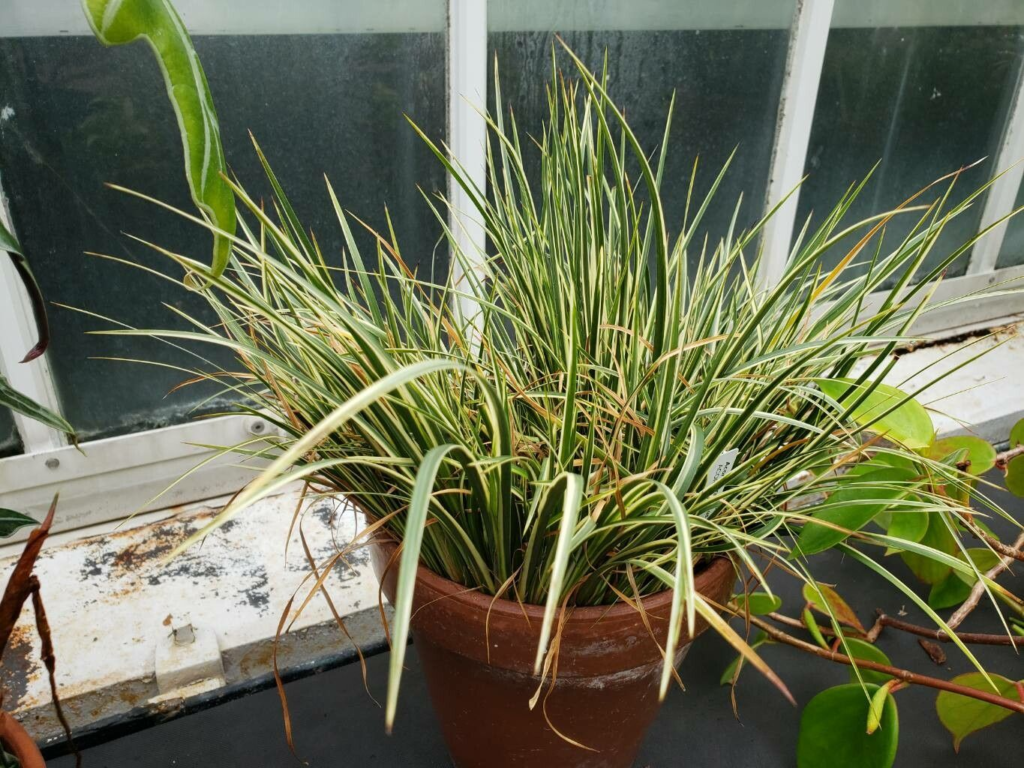
Ornamental grasses are popular plants for pots and containers. They add soft texture, gentle movement, and strong visual interest to patios, balconies, and gardens. Growing grasses in containers also makes them easier to manage. You can control their size, prevent spreading, and divide them when needed.
One important thing to know is that grasses grown in pots are usually less cold-hardy than those planted in the ground. In most cases, they behave as if they are two hardiness zones warmer. In cold areas, you can grow them as annuals or move the containers indoors during winter.
Below are 11 ornamental grasses that grow well in containers. Each one is chosen for its beauty, manageable size, and ability to thrive in pots.
11 Ornamental Grasses for Container Gardening
1. Blue Fescue (Festuca glauca)
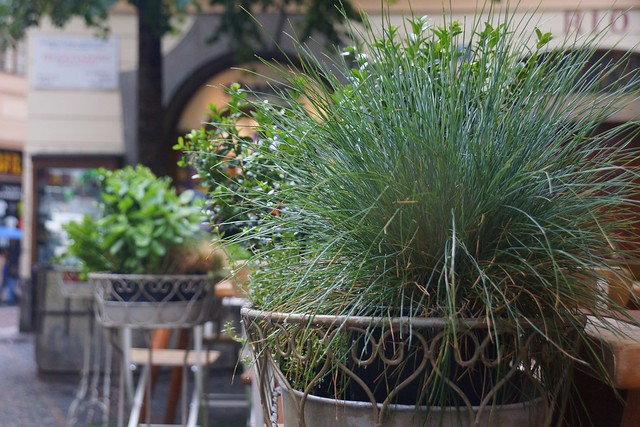
Blue Fescue is a small, neat grass that forms round clumps. It grows 6 to 12 inches tall and wide. The narrow leaves are blue-green to silvery blue.
In late spring or early summer, it produces small, pale flowers. Once established, it is drought-tolerant. It prefers full sun and well-drained soil.
- USDA Zones: 4–8
- Light: Full sun to light shade
- Soil: Well-drained, average to poor
- Color: Blue-green foliage, pale flowers
2. Pennisetum ‘Rubrum’ (Purple Fountain Grass)
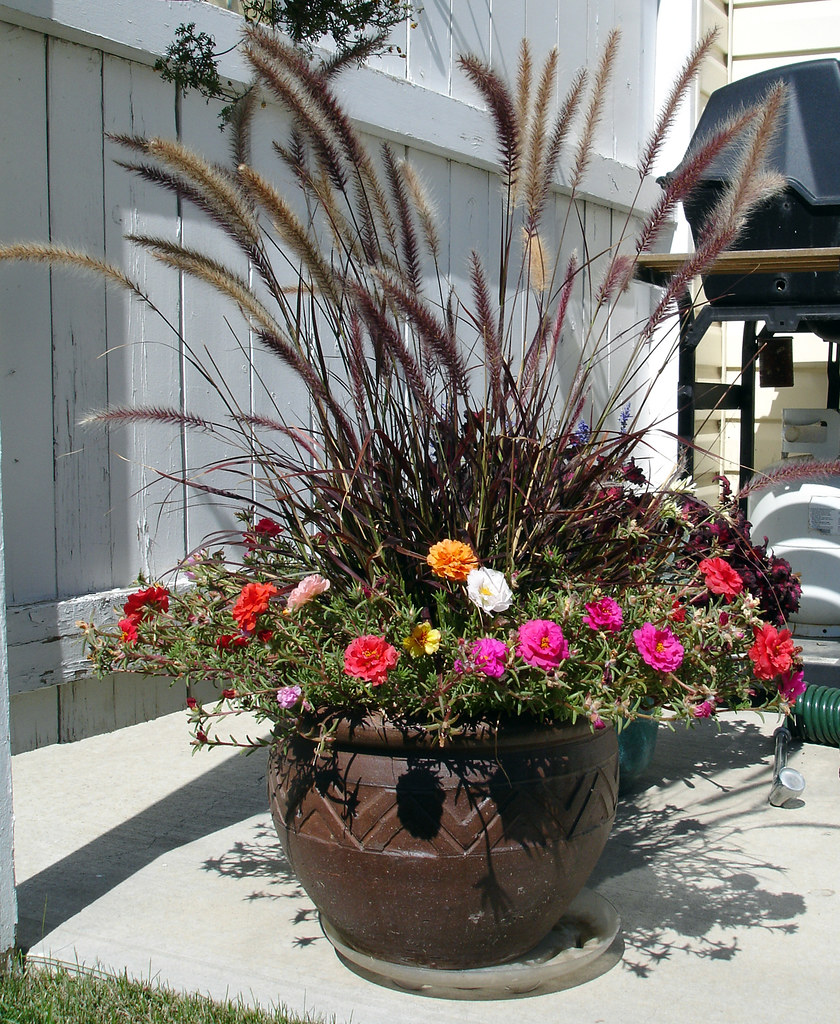
Purple Fountain Grass is a warm-season grass with upright growth. It grows 3 to 5 feet tall and 2 to 4 feet wide. The leaves are deep burgundy-red and become darker as the season goes on.
In late summer, it produces soft, fuzzy flower plumes that start pink and turn tan. It is not cold-hardy and is usually grown as an annual.
- USDA Zones: 9–11 (annual in cold areas)
- Light: Full sun
- Soil: Well-drained, moderately fertile
- Color: Burgundy-red leaves, pink to tan plumes
3. Carex ‘Evergold’ (Variegated Japanese Sedge)
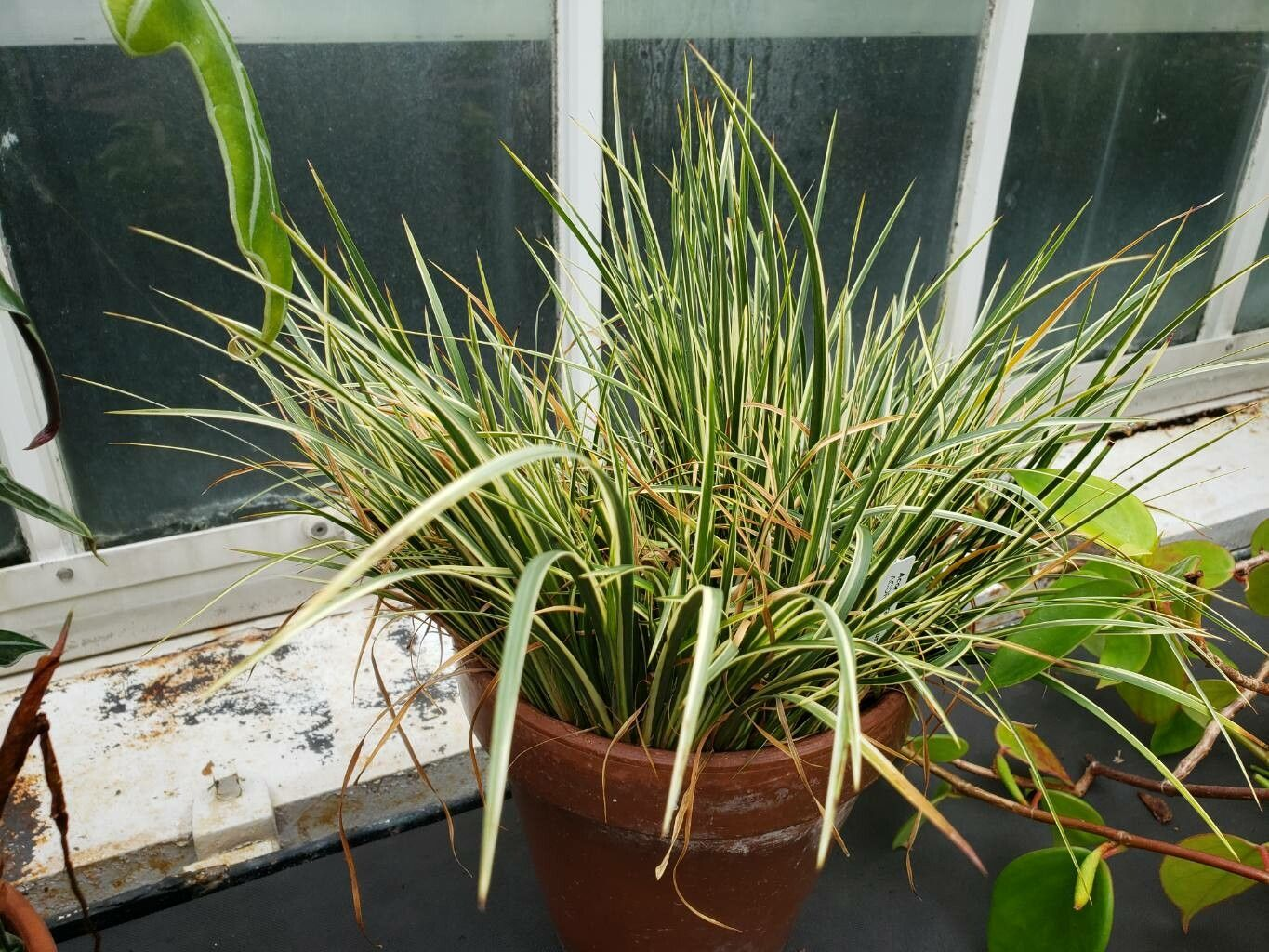
Carex ‘Evergold’ is a grass-like plant that stays low and compact. It grows 12 to 18 inches tall and wide. The leaves are thin and arching, with a creamy yellow center and dark green edges.
It prefers shade and moist soil, making it ideal for shaded patios or woodland-style containers. Flowers are small and not showy.
- USDA Zones: 5–9
- Light: Partial to full shade
- Soil: Moist, well-drained
- Color: Cream and green leaves
4. Japanese Forest Grass (Hakonechloa macra)
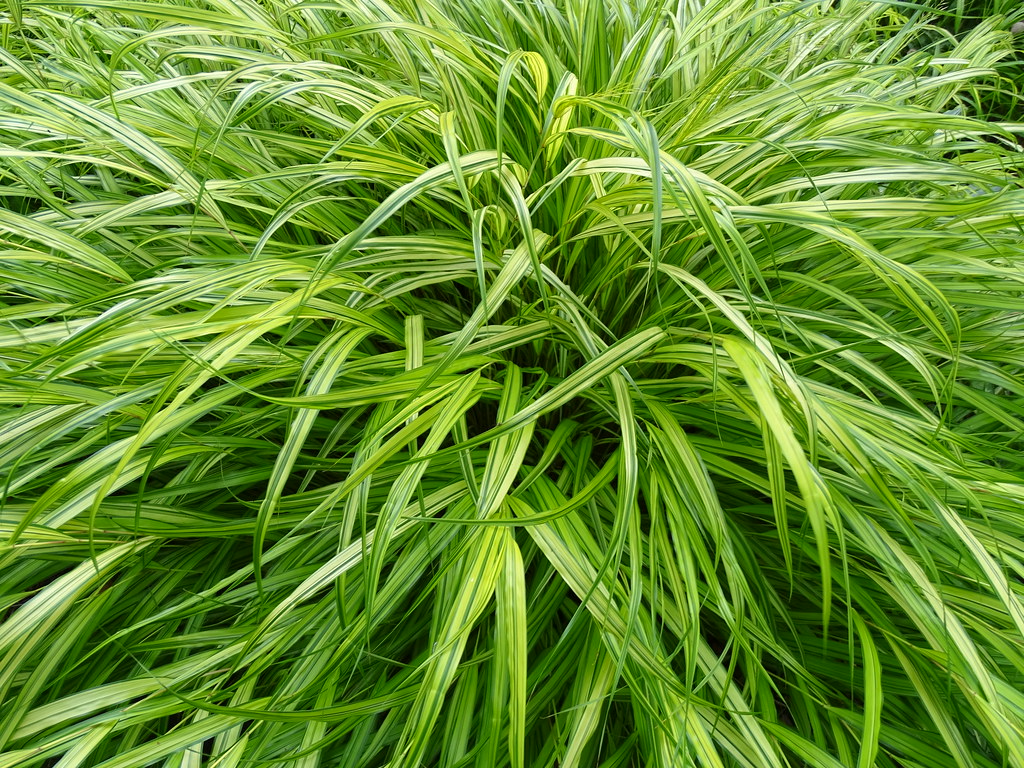
This graceful grass forms soft, arching clumps that spill over container edges. It grows 12 to 18 inches tall and spreads up to 24 inches wide.
Most varieties are green, but some are golden or variegated. It grows slowly and prefers shade and rich, moist soil.
- USDA Zones: 5–9
- Light: Partial to full shade
- Soil: Moist, rich, well-drained
- Color: Green, gold, or variegated
5. Feather Reed Grass (Calamagrostis x acutiflora)
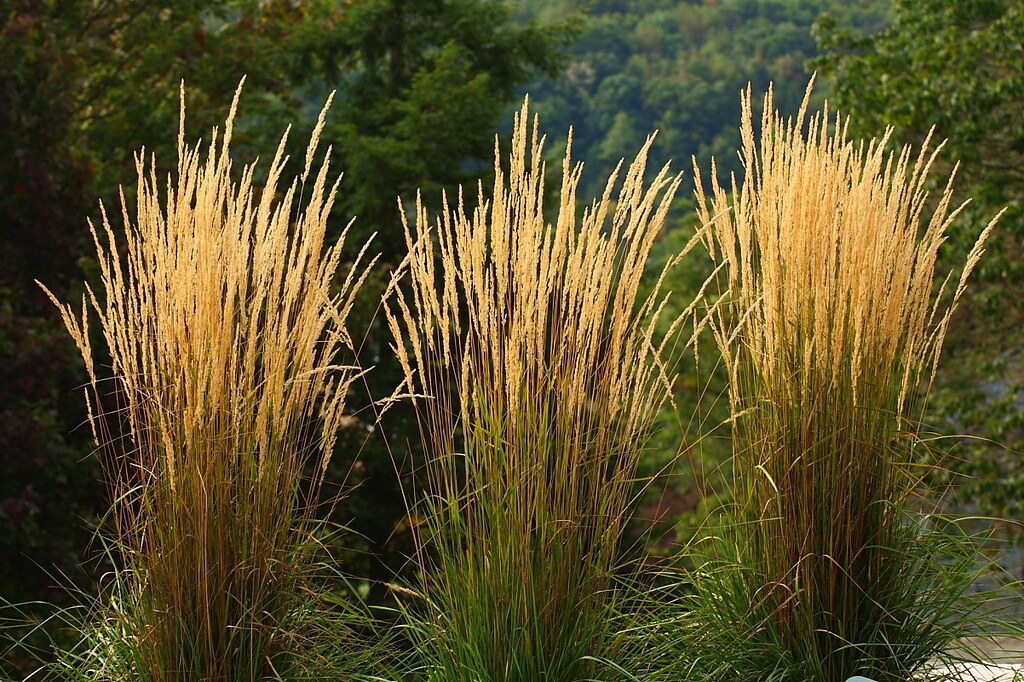
Feather Reed Grass grows upright and tall, reaching 3 to 5 feet high. It has narrow green leaves and produces feathery flower plumes in early summer.
The plumes start pinkish-green and turn golden tan. They last through winter, adding year-round interest. This grass is easy to care for and adapts to many soil types.
- USDA Zones: 4–9
- Light: Full sun to partial shade
- Soil: Average to moist, well-drained
- Color: Green leaves, golden plumes
6. Fountain Grass (Pennisetum alopecuroides)
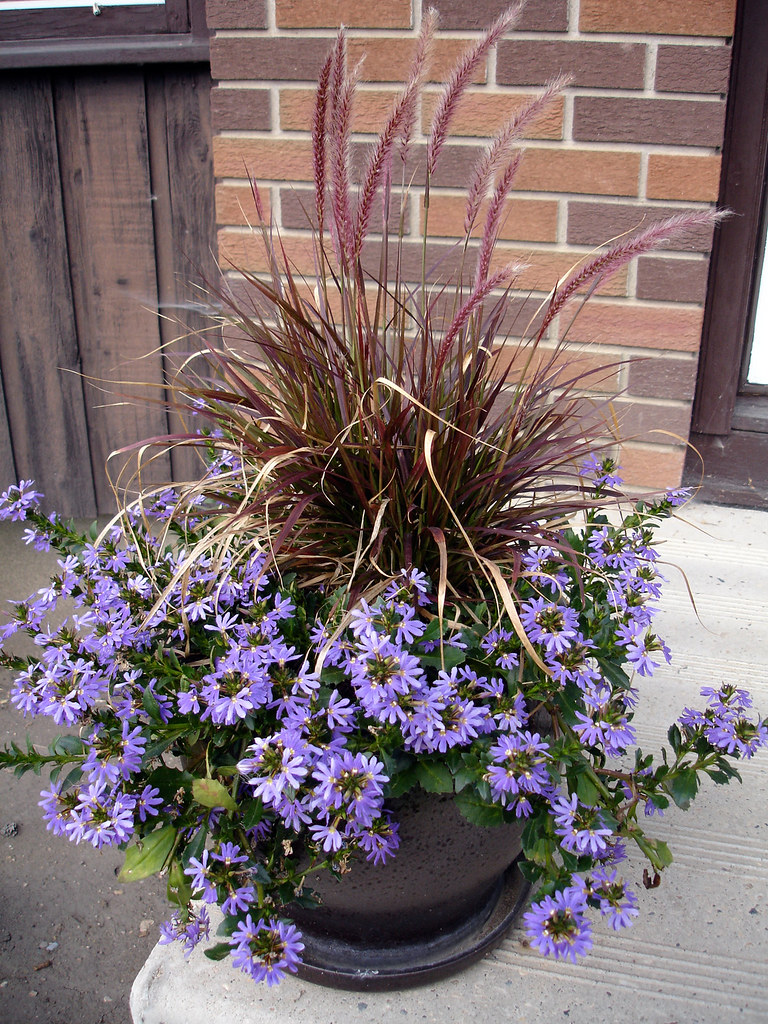
Fountain Grass forms soft, rounded clumps 2 to 3 feet tall and wide. The fine green leaves arch outward.
In late summer, it produces fluffy flower plumes that start pink or purple and fade to beige. The plumes often last into winter. It is drought-tolerant once established.
- USDA Zones: 5–9
- Light: Full sun to light shade
- Soil: Well-drained, average
- Color: Green leaves, pink to buff plumes
7. Pampas Grass (Cortaderia selloana)
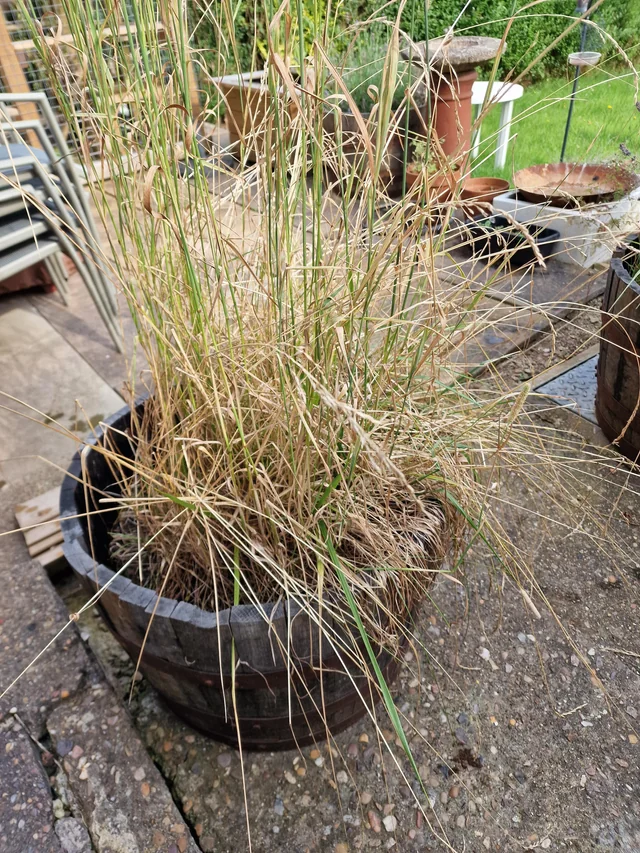
Pampas Grass is very large and bold. It can grow 6 to 10 feet tall and 4 to 6 feet wide. The long leaves are sharp, so care is needed when handling.
In late summer, it produces tall, fluffy plumes that are usually white or pale pink. Because of its size, it is best suited for very large containers and open spaces.
- USDA Zones: 7–11
- Light: Full sun
- Soil: Well-drained, fertile
- Color: Green leaves, white or pink plumes
8. Little Bluestem (Schizachyrium scoparium)
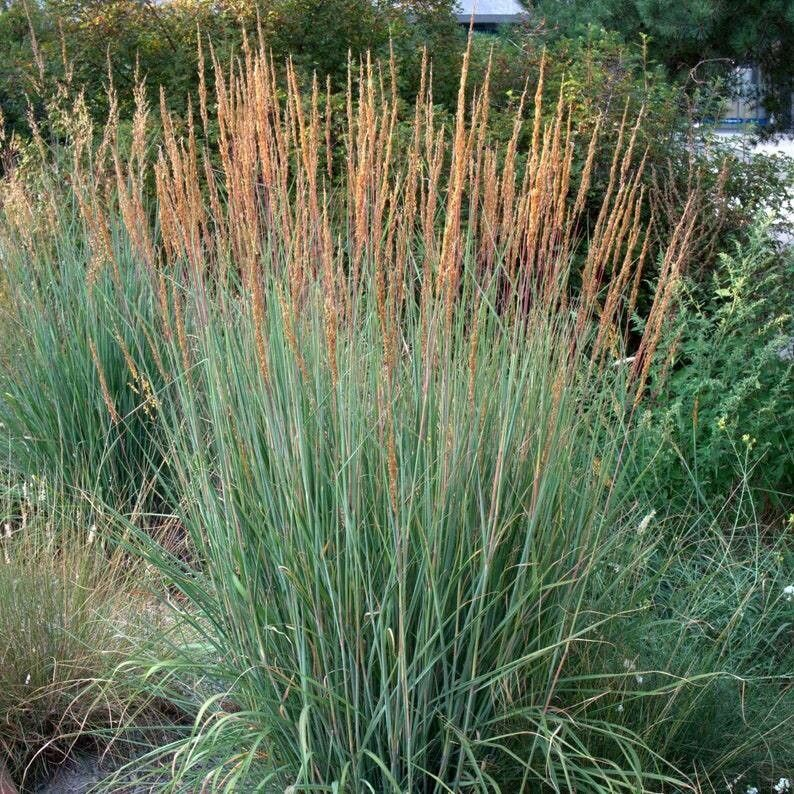
Little Bluestem is a native grass with upright growth. It reaches 2 to 3 feet tall. The leaves are blue-green in summer and turn copper-orange in fall.
It produces small flowers followed by silvery seed heads. This grass is very drought-tolerant and grows well in poor soil.
- USDA Zones: 3–9
- Light: Full sun
- Soil: Well-drained, poor to average
- Color: Blue-green turning orange, silver seed heads
9. Sweet Flag Grass (Acorus calamus)
Sweet Flag is a water-loving plant with long, sword-like leaves. It grows 2 to 3 feet tall and wide.
It prefers wet soil and can grow in shallow water, making it ideal for water containers or rain gardens. When crushed, the leaves have a pleasant scent.
- USDA Zones: 4–10
- Light: Full sun to partial shade
- Soil: Wet to very moist
- Color: Green or variegated leaves
10. Switchgrass (Panicum virgatum)
Switchgrass is a tall native grass that grows 3 to 6 feet high. The leaves are blue-green and turn yellow in fall.
In late summer, it produces airy, reddish-purple flowers that last into winter. It is hardy, drought-tolerant, and easy to grow.
- USDA Zones: 4–9
- Light: Full sun to light shade
- Soil: Well-drained, average to poor
- Color: Blue-green leaves, purple flowers
11. Blue Oat Grass (Helictotrichon sempervirens)
Blue Oat Grass forms dense clumps 2 to 3 feet tall and wide. The leaves are narrow and blue-gray in color.
In early summer, tall stems rise above the leaves with oat-like seed heads. This grass keeps its color year-round and needs little care.
- USDA Zones: 4–9
- Light: Full sun
- Soil: Well-drained, average to poor
- Color: Blue-gray leaves, tan seed heads
How to Design Containers with Ornamental Grasses
Choose the Right Container
Pick a pot that matches the mature size of the grass. The container should be wide and deep enough to allow healthy root growth. Materials like ceramic, metal, and thick plastic work well and help protect roots from temperature changes.
Use Grasses as Focal Points
Tall grasses such as Pampas Grass or Fountain Grass look great as center plants in large pots. Place them near doorways, patios, or corners to create strong visual impact and add height.
Mix Grasses with Other Plants
Combine grasses with flowering plants, succulents, or trailing vines. Choose plants with different leaf shapes, colors, and textures to create contrast and interest.
Arrange Pots for Best Effect
Group containers of different sizes and heights together. Think about how people move through the space and where the containers will be seen from different angles.
I’m Emma Parker, the writer and founder behind Emma’s Home Guide. This blog was created to share practical ideas, honest experiences, and helpful guidance for everyday living. My goal is to make home life feel easier, warmer, and more enjoyable, without pressure or perfection.